Valley of the Kings Luxor: Royal Tombs & Ancient Burial Ground
Discover the Valley of the Kings, Luxor's legendary royal necropolis hidden in the desert cliffs of the West Bank. Home to 63 tombs of Egypt's most powerful pharaohs including Tutankhamun, Ramesses II, and Seti I, this UNESCO World Heritage Site preserves 500 years of burial traditions with vivid wall paintings depicting the journey to the afterlife. Walk into the heart of the mountain where the New Kingdom rulers chose to rest for eternity.
Location: Luxor
Carved into the barren limestone hills of Luxor’s West Bank, the Valley of the Kings is arguably the most famous archaeological site on Earth. For nearly 500 years, from the 16th to the 11th century BC, the pharaohs of the New Kingdom abandoned the tradition of building pyramids and instead chose this remote desert valley to conceal their tombs, treasures, and secrets of the afterlife.
A Hidden Valley Chosen by Pharaohs
Why the Pharaohs Abandoned Pyramids
The Great Pyramids of Giza had served their purpose for centuries, but they also served as giant beacons advertising the location of royal treasures. By the time the New Kingdom began around 1550 BC, virtually every pyramid tomb had been looted. Pharaoh Thutmose I and his royal architect Ineni made a revolutionary decision: carve a secret tomb deep into the limestone cliffs of a remote desert valley on the Nile’s West Bank, far from population centers and hidden from view.
The choice was strategic. The valley sits behind a naturally pyramid-shaped mountain peak known as “al-Qurn” (The Horn), which the ancient Egyptians associated with the goddess Meretseger, “She Who Loves Silence.” This natural pyramid rising above their tombs gave the pharaohs symbolic protection while the valley’s narrow entrance could be guarded against intruders.
500 Years of Royal Burials
From Thutmose I around 1504 BC to Ramesses XI around 1070 BC, successive pharaohs expanded the necropolis, each ruler attempting to outdo their predecessors in the grandeur and depth of their tomb. Over this period, 63 tombs were carved into the valley floor and cliffs, housing not only pharaohs but also powerful nobles and members of the royal family. The valley became ancient Egypt’s most sacred burial ground during what historians consider the civilization’s golden age.
The Tombs: Underground Masterpieces
Engineering in Stone
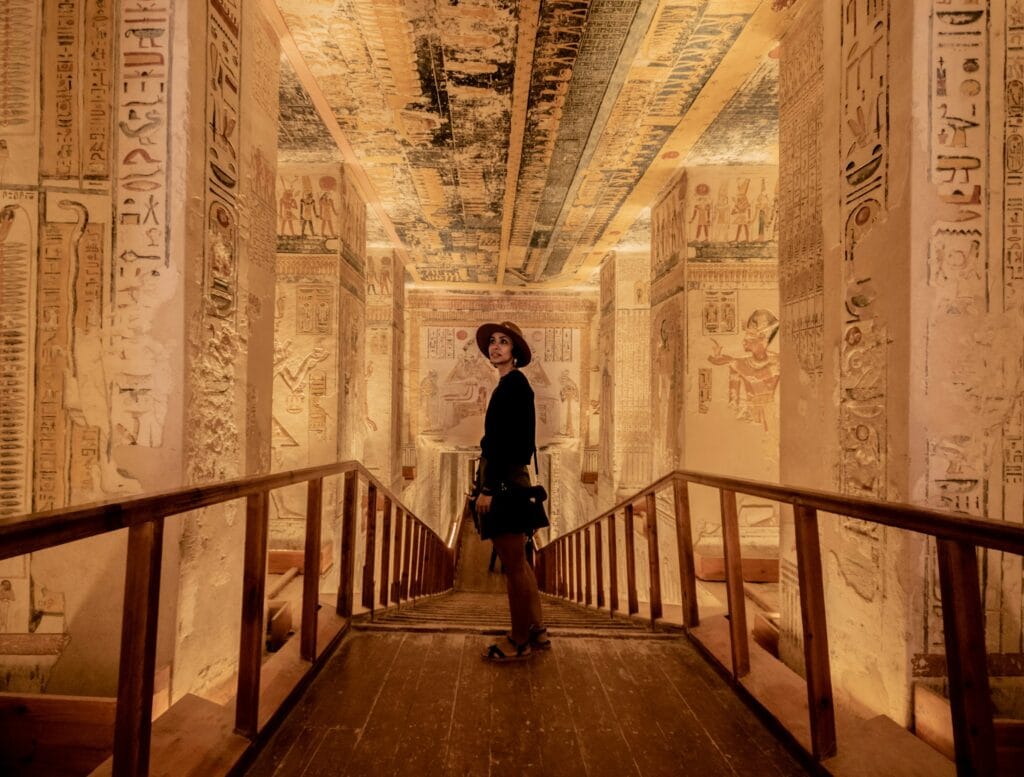
The tombs of the Valley of the Kings are marvels of ancient engineering. Workers from the nearby village of Deir el-Medina spent years carving each tomb using copper and bronze tools, chiseling through solid limestone to create corridors, chambers, and halls that descend deep into the mountainside. Some tombs extend over 100 meters into the rock, with multiple corridors, antechambers, well shafts (designed to trap floodwater and confuse tomb robbers), pillared halls, and grand burial chambers.
The workers who built these tombs were skilled artisans living in a purpose-built village, and their daily records—preserved on limestone flakes called ostraca—give us remarkable insight into the construction process, working conditions, and even the world’s earliest recorded labor strike.
Walls That Tell the Story of Eternity
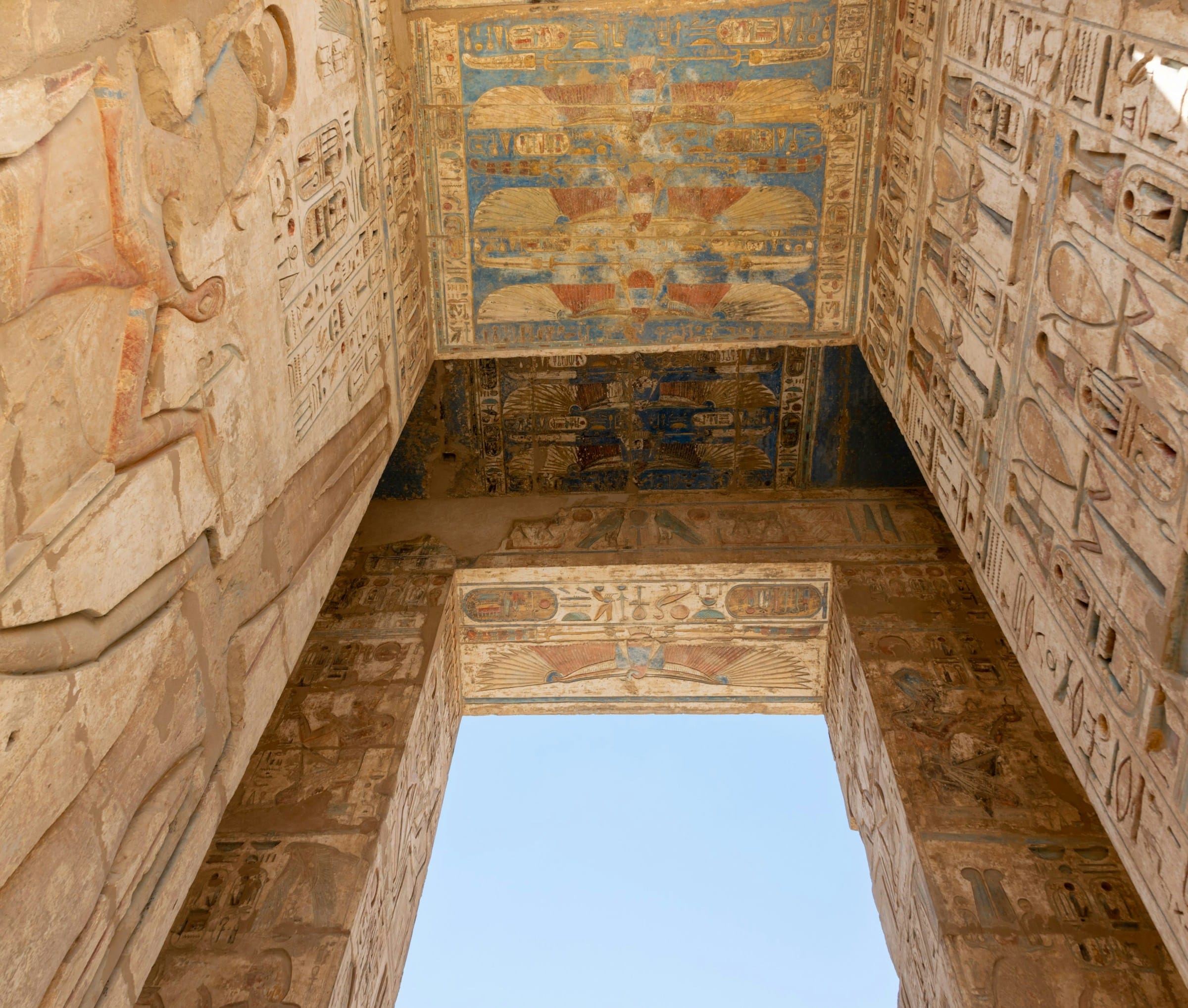
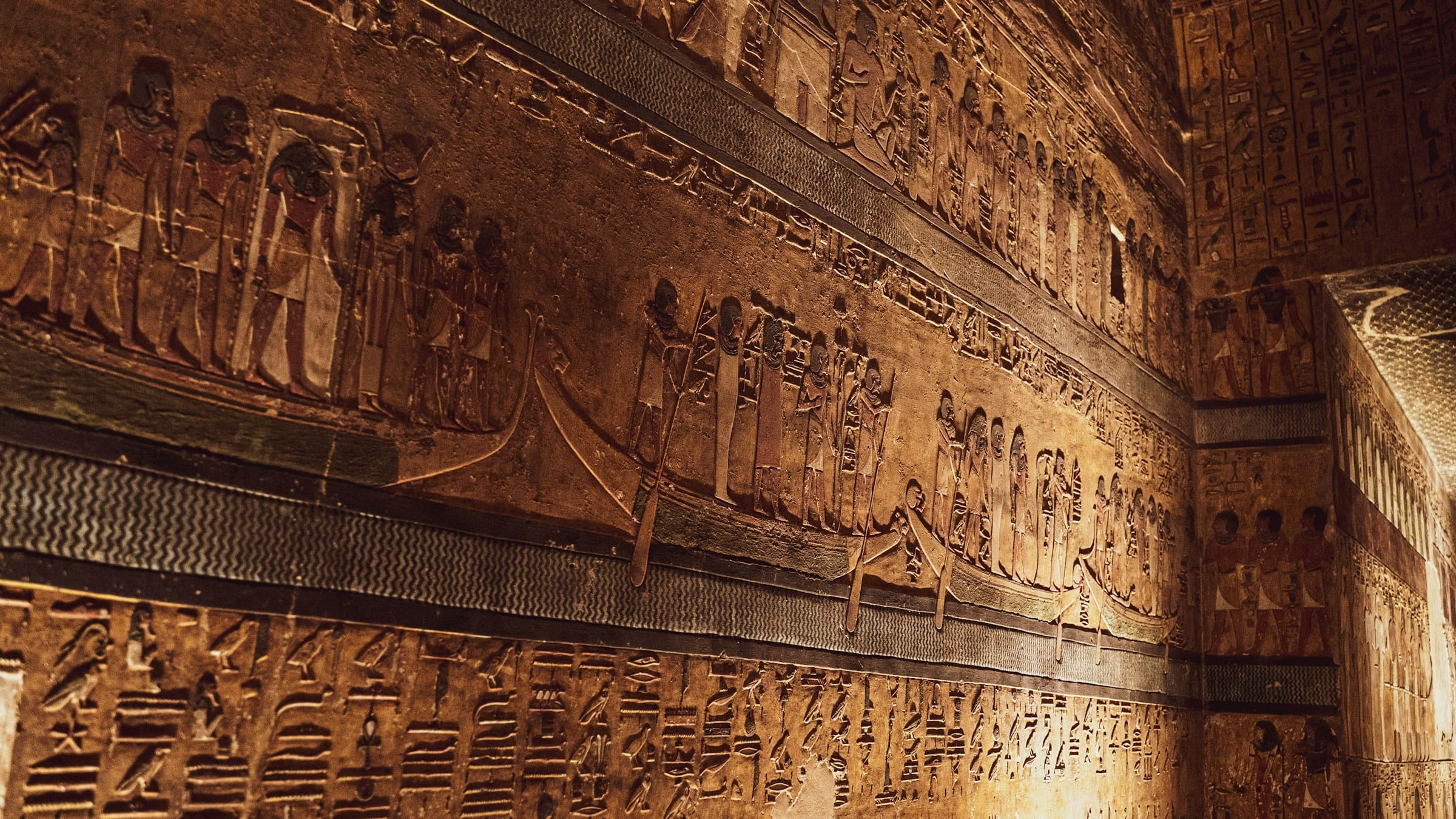
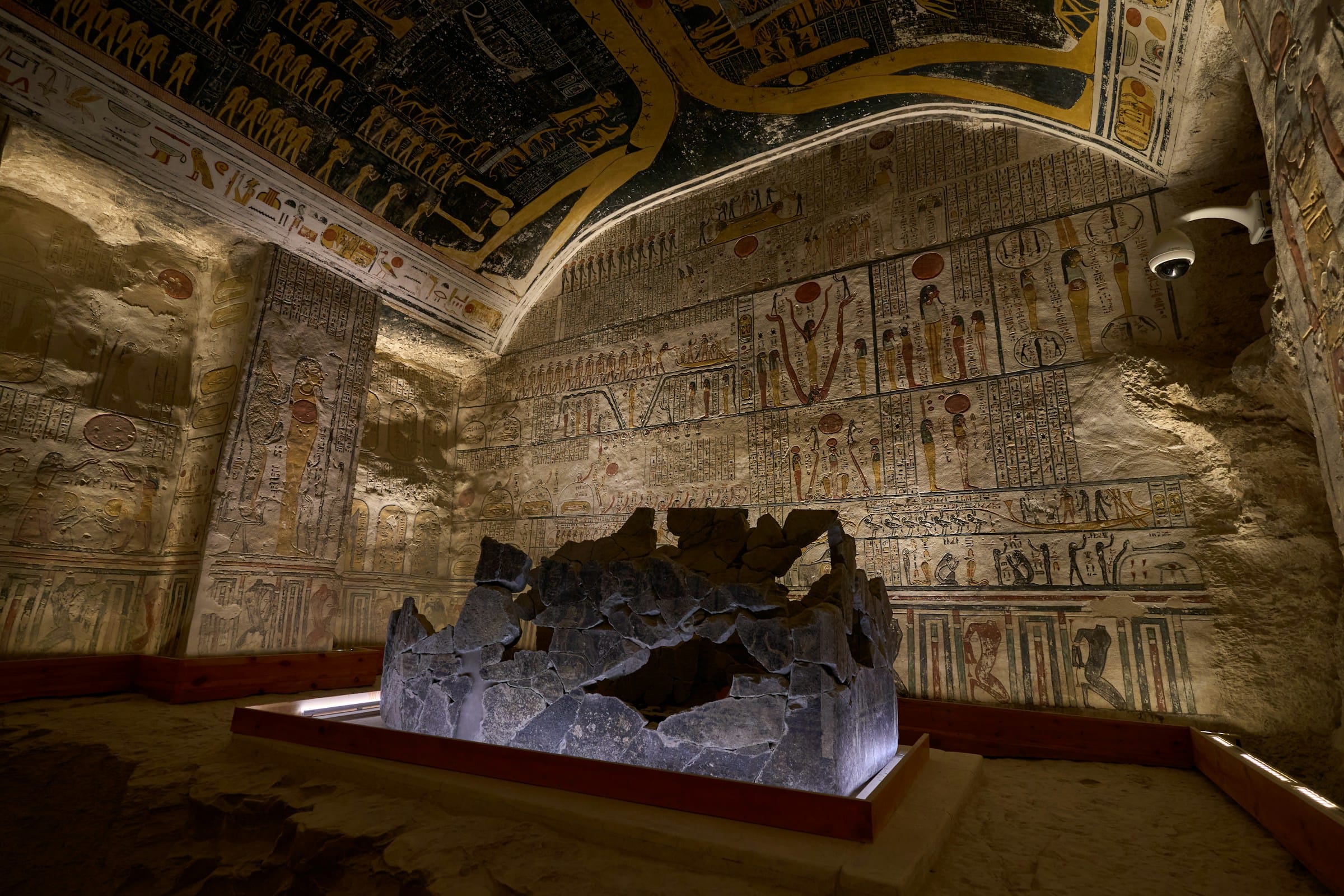
What makes the Valley of the Kings truly extraordinary is not just the architecture but the decoration. Nearly every surface inside these tombs is covered with elaborate paintings and carved reliefs depicting scenes from ancient Egyptian funerary texts. These were not decorations—they were functional magical spells designed to guide the pharaoh’s soul through the dangers of the underworld to eternal life.
The major texts found on tomb walls include the Book of the Dead, which provided spells for navigating the afterlife; the Amduat, describing the sun god Ra’s twelve-hour journey through the underworld each night; the Book of Gates, depicting the gates and guardians the soul must pass; and the Book of Caverns, showing the rewards for the righteous and punishments for the damned. The colors in many tombs remain remarkably vivid after more than 3,000 years, preserved by the dry desert climate and sealed burial chambers.
Must-See Tombs
Tomb of Tutankhamun (KV62)
The most famous tomb in the valley belongs to the “Boy King” who ruled Egypt from approximately 1332 to 1323 BC. Ironically, it is one of the smallest royal tombs, but its fame comes from being discovered nearly intact by Howard Carter on November 4, 1922—making it the greatest archaeological discovery of the 20th century. The tomb contained over 5,000 artifacts, including the iconic solid gold death mask now displayed at the Grand Egyptian Museum. The burial chamber still contains Tutankhamun’s mummy within his outermost golden coffin and the original stone sarcophagus.
Tomb of Ramesses VI (KV9)
One of the valley’s most spectacular tombs, originally carved for Ramesses V and expanded by his successor. Every inch of the walls and ceilings is covered with astronomical scenes and funerary texts. The burial chamber ceiling features a dramatic double depiction of the sky goddess Nut swallowing and giving birth to the sun, considered one of the finest examples of ancient Egyptian astronomical art.
Tomb of Seti I (KV17)
Often called the finest tomb in the valley, the tomb of Seti I extends 137 meters into the mountain—the longest in the valley. Discovered by Giovanni Belzoni in 1817, its painted reliefs are extraordinarily detailed and well-preserved, featuring scenes from the Amduat, the Book of Gates, and the Litany of Ra. The astronomical ceiling of the burial chamber, depicting constellations and the journey of the stars, influenced tomb design for generations.
Tomb of Ramesses III (KV11)
Known as the “Tomb of the Harpers” for its unique scene depicting blind harpists playing music, this tomb offers fascinating glimpses into daily life alongside traditional religious scenes. Side chambers show images of cooking, baking, and crafting—unusual domestic subjects rarely found in royal tombs.
Tomb of Ramesses IV (KV2)
One of the most accessible tombs with well-preserved ceiling decorations featuring the goddess Nut stretched across the heavens. The ancient papyrus plan of this tomb, now in Turin, is the oldest known architectural drawing in existence and matches the actual tomb layout remarkably well.
Howard Carter and the Discovery of Tutankhamun
The Search That Almost Failed
British archaeologist Howard Carter had been searching the Valley of the Kings for six years under the patronage of Lord Carnarvon. By 1922, Carnarvon was ready to withdraw funding, convinced there was nothing left to find. Carter persuaded him to fund one final season of excavation.
On November 4, 1922, a water boy stumbled upon a stone step hidden beneath ancient workers’ huts. Carter’s team uncovered a staircase leading down to a sealed doorway bearing the royal necropolis seals. On November 26, Carter made a small hole in the sealed chamber door and peered inside by candlelight. When Carnarvon asked, “Can you see anything?” Carter replied with the now-legendary words: “Yes, wonderful things.”
A Treasure That Changed Archaeology
The tomb took Carter ten years to fully excavate and catalog. The treasures included golden shrines, jewelry, chariots, furniture, clothing, food offerings, and the magnificent nested coffins—the innermost made of 110 kilograms of solid gold. The discovery captured worldwide attention and sparked a global fascination with ancient Egypt that continues to this day.
Best Time to Visit
Seasonal Considerations
Winter (November–February): The ideal season with comfortable temperatures between 20–28°C. The valley receives the most international visitors during this period, so early morning visits are recommended.
Spring (March–May): Pleasant temperatures but occasional khamsin sandstorms can reduce visibility. Good shoulder-season choice with fewer crowds than winter.
Summer (June–August): Extremely hot, with temperatures regularly exceeding 40°C inside the valley. If visiting in summer, arrive at opening time and carry plenty of water. The lack of shade in the valley makes midday visits particularly challenging.
Fall (September–October): Heat begins to subside, crowds thin out, and conditions improve significantly by late October.
Time of Day
Early Morning (Opening Time): The best time to visit. Cooler temperatures, fewer crowds, and the best light for photography outside the tombs. The valley opens at 6:00 AM in summer and 6:00 AM in winter.
Late Morning/Midday: Increasing heat and tour group crowds. Most visitors arrive between 9:00 AM and 12:00 PM.
Afternoon: Crowds diminish but heat peaks, especially in warmer months.
Practical Information
Location and Access
The Valley of the Kings is located on the West Bank of the Nile in Luxor, approximately 4 kilometers from the riverbank, in a desert valley behind the Theban Hills. It is approximately 650 km south of Cairo (a 1-hour flight or 9-hour drive) and 3 km from the Colossi of Memnon at the entrance to the West Bank area.
Entry and Visiting Hours
Opening hours are typically 6:00 AM to 5:00 PM (winter) and 6:00 AM to 5:00 PM (summer). A standard entry ticket includes access to three tombs (specific tombs rotate to manage conservation). Separate tickets are required for the Tomb of Tutankhamun (KV62), the Tomb of Seti I (KV17), and the Tomb of Ramesses V/VI (KV9). Photography inside the tombs requires an additional permit. A small electric tram operates from the entrance to the tomb area for visitors who prefer not to walk.
What to Bring
Comfortable walking shoes are essential as paths are sandy and uneven. Sun protection including a hat, sunscreen, and sunglasses is crucial given the exposed desert setting with no shade. Bring plenty of water—at least one liter per person—as hydration is vital in the desert heat. A small flashlight can help illuminate details in dimly lit tomb corners, and a camera is useful for exterior shots (check photography permit rules for tomb interiors).
Combining Your Visit
The Valley of the Kings sits within Luxor’s vast West Bank necropolis, and a visit combines naturally with several nearby attractions.
Nearby Attractions:
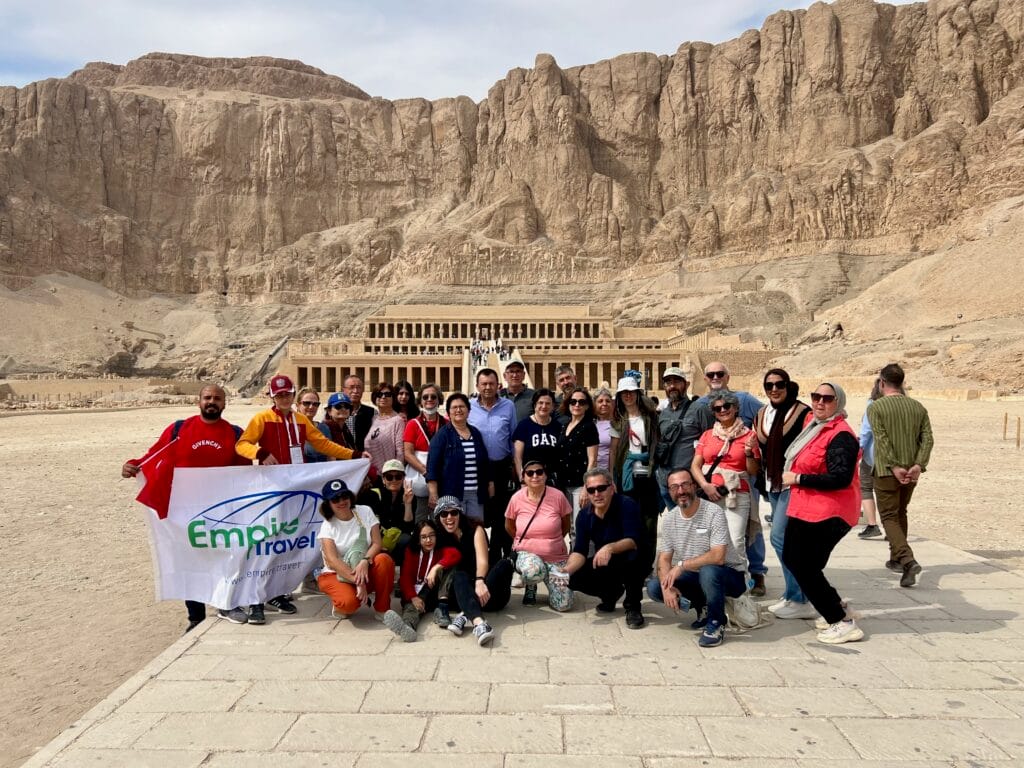
The Temple of Queen Hatshepsut at Deir el-Bahari is just 1 km away and is one of Egypt’s most architecturally stunning monuments, carved into limestone cliffs. The Valley of the Queens, 3 km away, houses the tombs of royal wives and children, including the exquisite Tomb of Nefertari. The Colossi of Memnon, 3 km toward the Nile, are two massive stone statues of Amenhotep III standing 18 meters tall. The Tombs of the Nobles, 2 km away, offer intimate painted scenes of daily Egyptian life—fishing, farming, and feasting—providing a fascinating contrast to the royal tombs. Medinet Habu, 4 km away, is the mortuary temple of Ramesses III with some of the best-preserved reliefs and color in all of Egypt.
The Perfect West Bank Day:
Start your morning at the Valley of the Kings when it opens, spending approximately two hours exploring three or four tombs. Continue to the Temple of Queen Hatshepsut before midday, then visit the Colossi of Memnon on your way back toward the Nile. If time allows, add the Valley of the Queens or Medinet Habu for a comprehensive West Bank experience.
Why Visit the Valley of the Kings?
Unmatched Historical Significance
This is where Egypt’s most powerful rulers—Ramesses the Great, Seti I, Tutankhamun—were laid to rest. Walking into these tombs connects you directly with 3,500 years of human history in a way few places on Earth can match.
Extraordinary Ancient Art
The wall paintings and reliefs inside these tombs represent the pinnacle of ancient Egyptian artistic achievement. The colors, detail, and scale of the decorations are astonishing, preserved by the dry desert environment for millennia.
The Tutankhamun Connection
Standing inside the tomb where Howard Carter made his legendary discovery brings history’s most famous archaeological moment to life. Seeing the pharaoh’s mummy still resting in the valley where he was buried over 3,300 years ago is a profound experience.
UNESCO World Heritage Status
The Valley of the Kings is part of the “Ancient Thebes with its Necropolis” UNESCO World Heritage Site, recognized as one of humanity’s most important cultural treasures and a site of outstanding universal value.
A Once-in-a-Lifetime Experience
Descending into the earth through corridors carved by ancient hands, surrounded by vivid paintings of gods, pharaohs, and the afterlife—this is an experience that stays with you forever.
Experience the Valley of the Kings with Empire Travel
Empire Travel offers expertly guided tours to the Valley of the Kings as part of our comprehensive Luxor excursions. Our licensed Egyptologist guides bring the tombs to life, explaining the meaning behind the wall paintings, the history of each pharaoh, and the stories of discovery that have captivated the world for over a century.
Tour Options:
Our Luxor West Bank Tour covers the Valley of the Kings, the Temple of Hatshepsut, and the Colossi of Memnon in a half-day excursion. For a complete experience, the Full-Day Luxor Tour combines the West Bank with the East Bank’s Karnak and Luxor Temples. Multi-day packages including Nile Cruise itineraries feature Valley of the Kings visits alongside temples at Edfu, Kom Ombo, and Aswan. Custom itineraries allow you to combine Luxor with Cairo, Alexandria, and Red Sea destinations for a comprehensive Egypt journey.
All tours include modern air-conditioned transportation, professional licensed Egyptologist guides, entrance fees to three tombs (with upgrade options for Tutankhamun and Seti I), flexible pacing for photography and exploration, and hotel or cruise ship pickup and drop-off.
Since 1987, Empire Travel has been helping visitors discover Egypt’s extraordinary heritage, combining deep local knowledge with genuine hospitality to create meaningful travel experiences that go beyond sightseeing.
Ready to walk where pharaohs were laid to rest? Contact us today to plan your Luxor adventure and descend into the legendary Valley of the Kings.
Attraction Gallery
Frequently Asked Questions (FAQs)
The Valley of the Kings is located on the West Bank of the Nile River in Luxor (ancient Thebes), Upper Egypt. It sits in a desert valley behind the Theban Hills, approximately 4 kilometers from the riverbank. Luxor is about 650 kilometers south of Cairo, reachable by a 1-hour domestic flight or an overnight Nile cruise from Aswan.
The Valley of the Kings contains 63 discovered tombs, numbered KV1 through KV63 (KV standing for “Kings’ Valley”). These include tombs of pharaohs, royal family members, and privileged nobles from the 18th, 19th, and 20th Dynasties of the New Kingdom period (approximately 1550–1070 BC). Not all tombs are open to the public at any given time, as Egyptian authorities rotate access to protect the fragile decorations.
A standard entry ticket to the Valley of the Kings includes access to three tombs. The available tombs rotate periodically to reduce wear on the ancient paintings. Separate premium tickets are required for the Tomb of Tutankhamun (KV62), the Tomb of Seti I (KV17), and the Tomb of Ramesses V/VI (KV9). Empire Travel can arrange all necessary tickets in advance, including premium tomb access.
Yes, the Tomb of Tutankhamun (KV62) is open to visitors but requires a separate ticket in addition to the standard Valley entry ticket. Inside, you can see the burial chamber with its original wall paintings and the pharaoh’s mummy still resting in the outermost golden coffin within the stone sarcophagus. The tomb is smaller than many others in the valley, but its historical significance makes it a must-visit for many travelers.
For history enthusiasts and first-time visitors, yes. Standing in the actual burial chamber where Howard Carter made his legendary 1922 discovery is a profound experience. You’ll see the original wall paintings and Tutankhamun’s mummy in his golden coffin. However, the tomb is small compared to others like Ramesses VI or Seti I. If you’re choosing one premium tomb, consider your priorities—historical significance (Tutankhamun) versus artistic grandeur (Seti I or Ramesses VI).
The most impressive tombs for first-time visitors include the Tomb of Ramesses VI (KV9) for its stunning astronomical ceiling and complete wall coverage; the Tomb of Seti I (KV17) for its exceptional artistry and length; the Tomb of Ramesses III (KV11) for its unique daily life scenes; and the Tomb of Ramesses IV (KV2) for its accessibility and well-preserved decorations. Tutankhamun’s tomb (KV62) is essential for its historical significance despite being smaller.
Plan to spend approximately 2 to 3 hours at the Valley of the Kings for a thorough visit. This allows time to explore three or four tombs with your guide, walk between tomb entrances, take photos, and absorb the atmosphere of this extraordinary site. If visiting premium tombs like Tutankhamun or Seti I, add 30 minutes per additional tomb. Most guided tours combine the Valley with other West Bank sites for a half-day or full-day excursion.
The best time to visit is during the cooler months from November through February, when daytime temperatures range from 20–28°C. Regardless of season, arriving at opening time (6:00 AM) is strongly recommended to avoid both heat and crowds. Summer visits (June–August) are possible but challenging, with temperatures exceeding 40°C and virtually no shade in the valley.
No. The Valley of the Kings is an exposed desert valley with virtually no natural shade between tombs. The only relief from the sun is inside the tombs themselves. Bring a hat, sunscreen, sunglasses, and plenty of water. In summer months, the lack of shade makes early morning visits essential.
Yes, a small electric tram (taftaf) operates from the visitor center to the tomb area, covering approximately 1 kilometer. The tram is included in your entry ticket and is helpful for conserving energy before exploring the tombs. However, you will still need to walk between individual tomb entrances and descend stairs into each tomb.
Yes, the Valley of the Kings can be fascinating for children, especially those interested in ancient Egypt, mummies, and treasure hunting. The story of Howard Carter’s discovery of Tutankhamun’s tomb captivates young imaginations. However, parents should note that the site involves walking on sandy, uneven terrain in hot conditions, and descending steep stairways into tombs. Comfortable shoes, sun protection, and plenty of water are essential. The electric tram from the entrance can help younger visitors conserve energy for the tomb visits themselves.
By the New Kingdom (around 1550 BC), pyramids had proven ineffective at protecting royal burials—virtually every pyramid tomb had been robbed. Pharaoh Thutmose I chose to carve a hidden tomb in the remote Valley of the Kings instead, hoping secrecy would succeed where monumental architecture had failed. The valley’s location behind the pyramid-shaped peak of al-Qurn provided symbolic connection to pyramid tradition while offering better concealment.
Yes, nearly all of them. Despite efforts at secrecy, most tombs were robbed in antiquity, some within years of burial. By the time of Ramesses IX (around 1100 BC), tomb robbery had become so rampant that priests relocated many royal mummies to secret caches for protection. Only Tutankhamun’s tomb survived largely intact into modern times, likely because debris from later tomb construction buried and concealed its entrance.
Yes. Unlike most royal mummies now housed in museums, Tutankhamun’s mummy remains in the Valley of the Kings inside his original tomb (KV62). The mummy rests within the outermost of his three nested golden coffins, placed inside the stone sarcophagus in the burial chamber. Visitors can see the mummy as part of their tomb visit.
The treasures from Tutankhamun’s tomb, including the iconic gold death mask, golden throne, chariots, and over 5,000 artifacts, are now displayed at the Grand Egyptian Museum (GEM) near the Pyramids of Giza in Cairo. The collection moved from the old Egyptian Museum in Tahrir Square to the new GEM, which houses the complete Tutankhamun collection in dedicated galleries.
The Valley of the Kings contains tombs of pharaohs and some powerful nobles, while the Valley of the Queens (located 3 km away) holds tombs of royal wives, princes, and princesses. The Valley of the Queens is smaller with around 90 tombs, including the spectacular Tomb of Nefertari, considered the most beautiful tomb in all of Egypt. Both valleys are on Luxor’s West Bank and can be visited on the same day.
Yes, but it’s a long day. Luxor is approximately 650 km south of Cairo. Options include taking an early morning flight (1 hour) to Luxor, touring the Valley of the Kings and other sites, and returning by evening flight. Alternatively, many travelers combine the Valley of the Kings with a multi-day Nile cruise or an overnight stay in Luxor for a more relaxed experience. Empire Travel offers both day trips and multi-day packages.
The Valley of the Kings is part of Luxor’s vast West Bank necropolis. Nearby attractions include the Temple of Queen Hatshepsut at Deir el-Bahari (1 km away), the Valley of the Queens including Nefertari’s Tomb (3 km), the Colossi of Memnon (3 km), the Tombs of the Nobles (2 km), and Medinet Habu temple of Ramesses III (4 km). On the East Bank, Karnak Temple and Luxor Temple complete a comprehensive Luxor experience. Empire Travel’s tours are designed to combine these sites efficiently.
While you can visit independently, an expert Egyptologist guide transforms the experience entirely. Without a guide, the wall paintings and hieroglyphics remain beautiful but mysterious. With a guide, every scene comes alive, you’ll understand the pharaoh’s journey through the underworld, identify gods and goddesses, appreciate the artistic techniques, and learn the dramatic stories of each ruler’s reign and the modern discoveries of their tombs. Empire Travel provides licensed Egyptologist guides who make the ancient world accessible and unforgettable.
Related Tours and Packages

6 Day Cairo & Aswan to Luxor Nile Cruise Tour
A 6-day journey through Cairo and a 3-night Nile cruise, featuring the Pyramids, Aswan, Luxor, and Egypt’s most…

8 Day Private Cairo Luxor and Aswan Nile Cruise Tour
Explore the best of Egypt on this 8 Day Private Cairo Luxor and Aswan Nile Cruise Tour. Visit…