Region
Lower Nubia
Twin rock-cut temples built by Ramesses II on the shores of Lake Nasser, featuring four colossal 20-meter statues and one of the greatest archaeological rescue operations in history. One of the most awe-inspiring sites in Egypt.
Plan My Abu Simbel Trip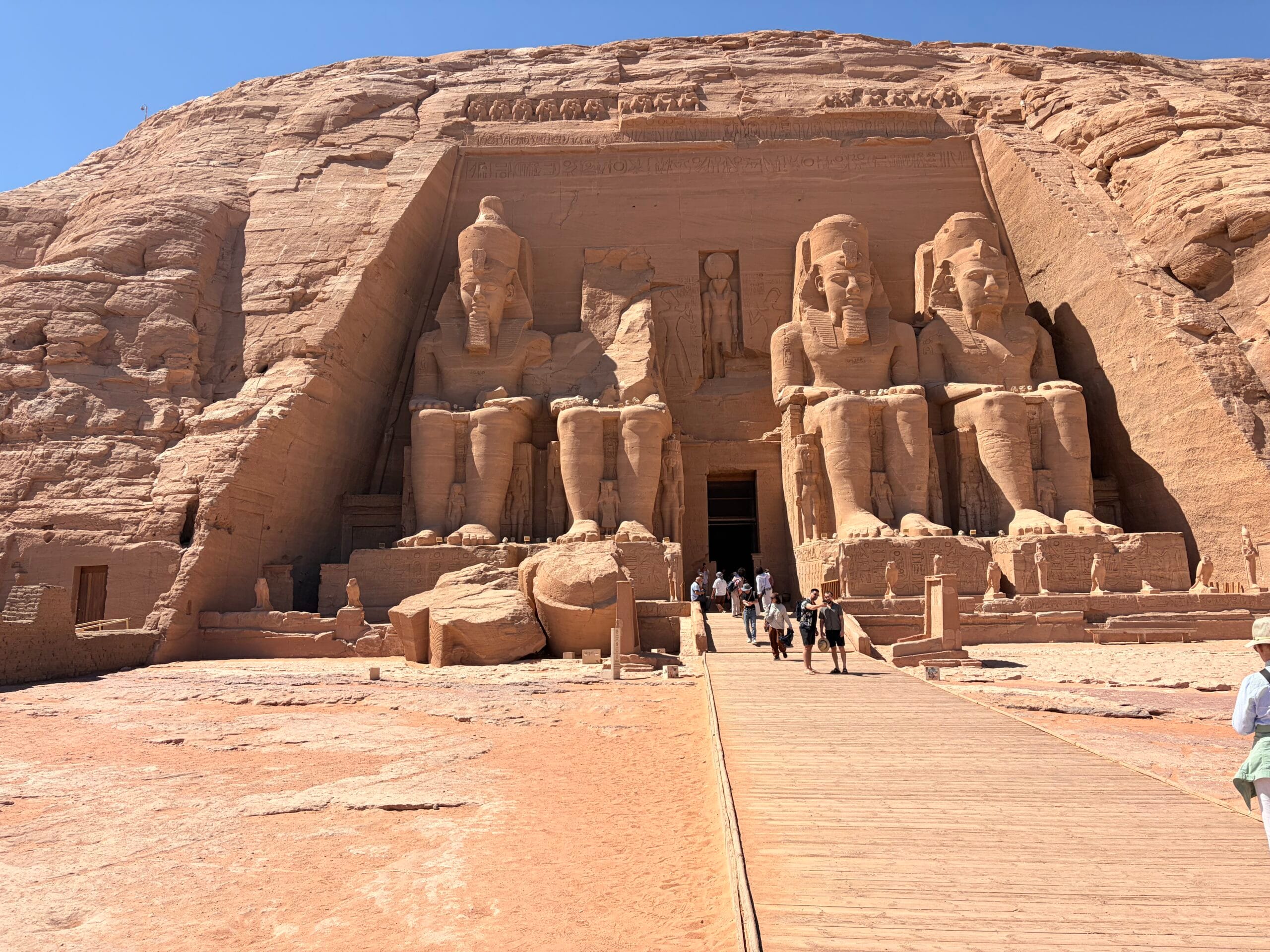
Lower Nubia
October – March
28°C / 82°F
3hr drive or 1hr flight from Aswan
Day trip or 1 overnight
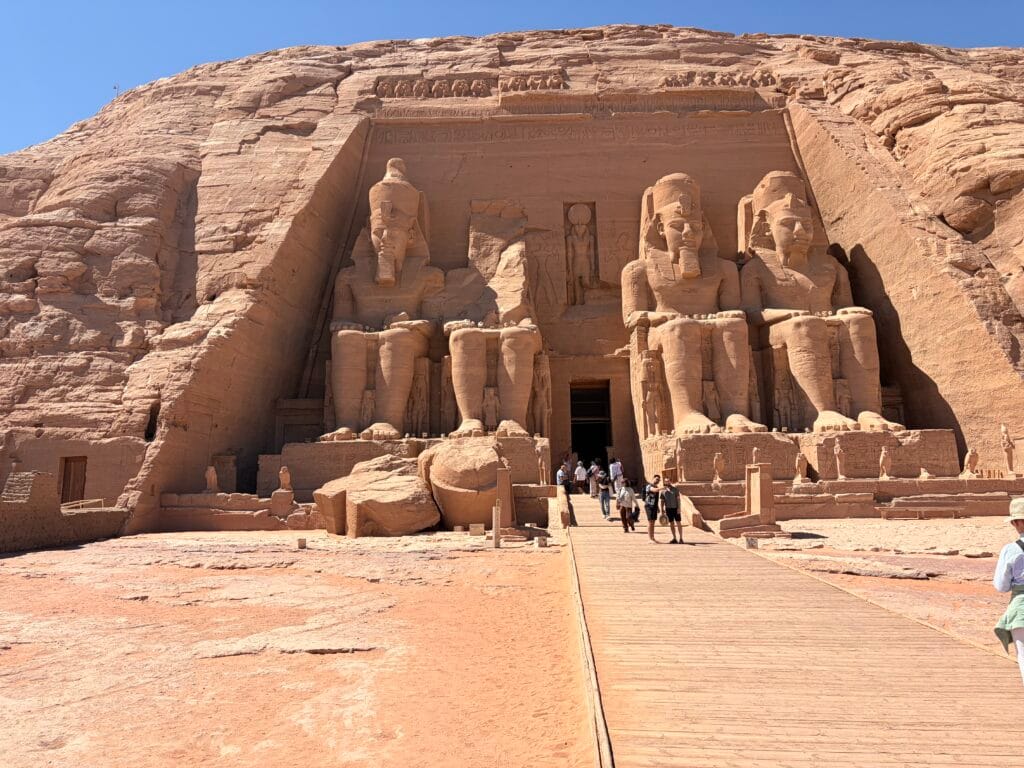
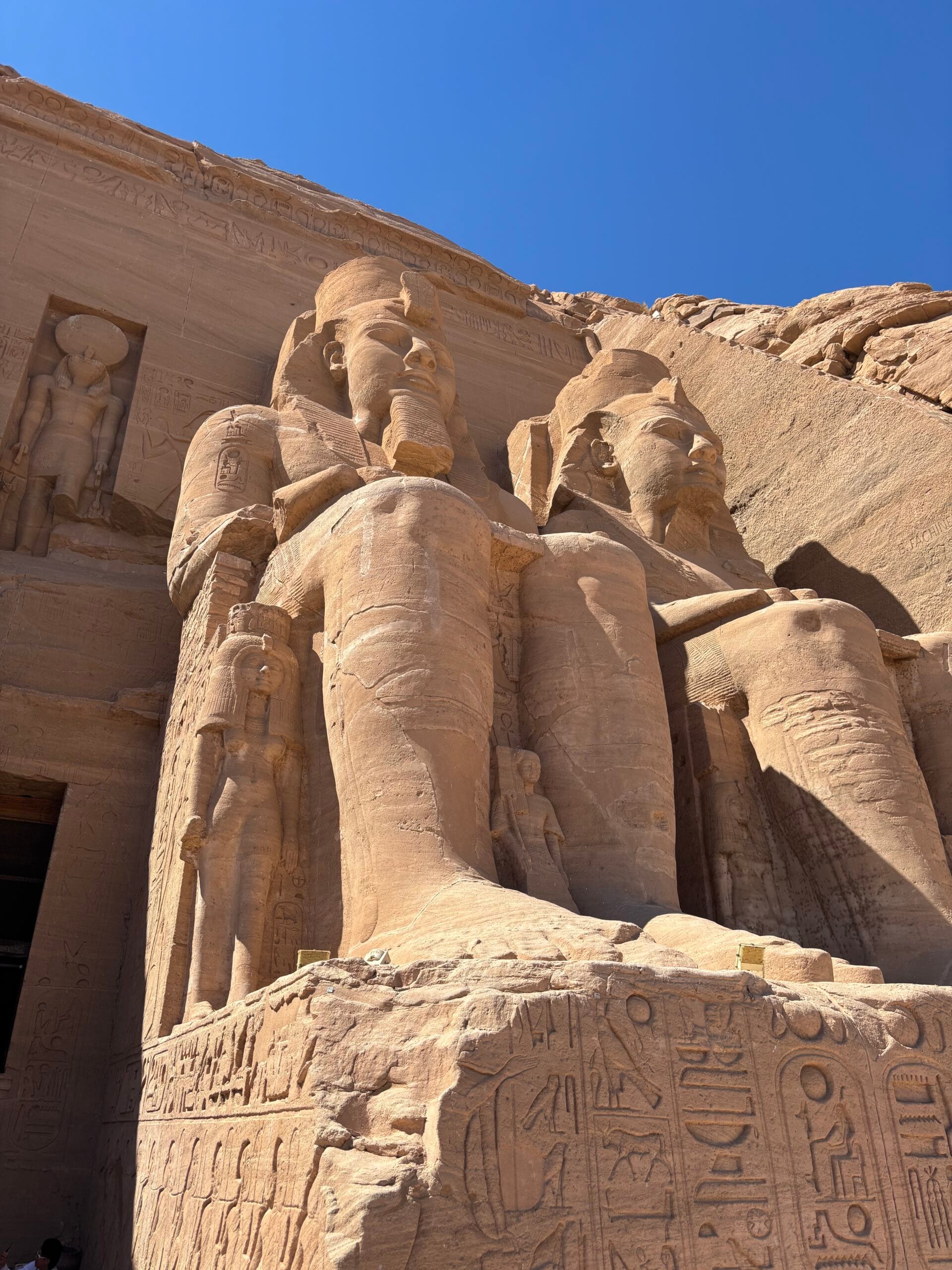
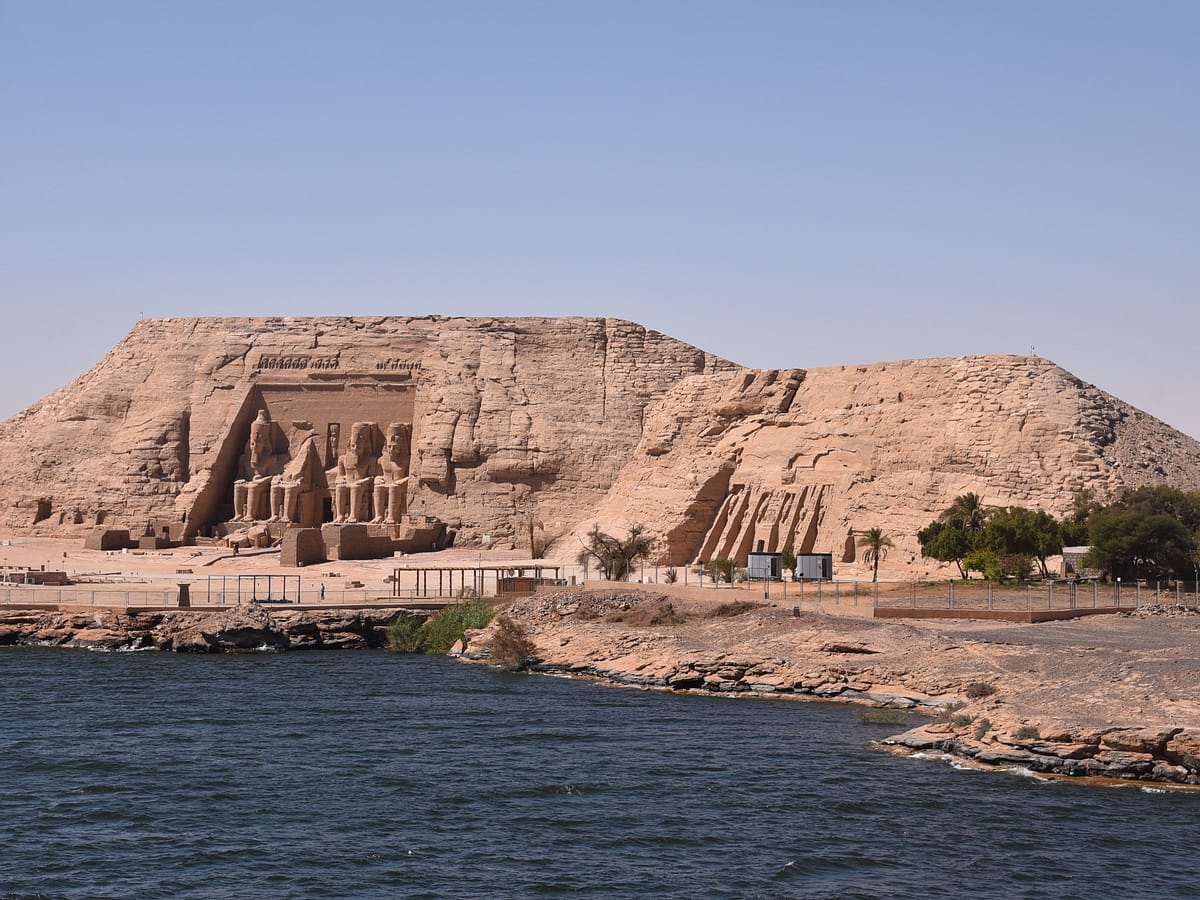
Abu Simbel is one of the most awe-inspiring archaeological sites in the world. Located 280 kilometers south of Aswan, near the Sudanese border on the western shore of Lake Nasser, the twin temples were carved directly into a sandstone cliff by Pharaoh Ramesses II in the 13th century BCE. Four colossal seated statues of the pharaoh, each over 20 meters tall, guard the entrance to the Great Temple, their gaze fixed eternally toward the rising sun.
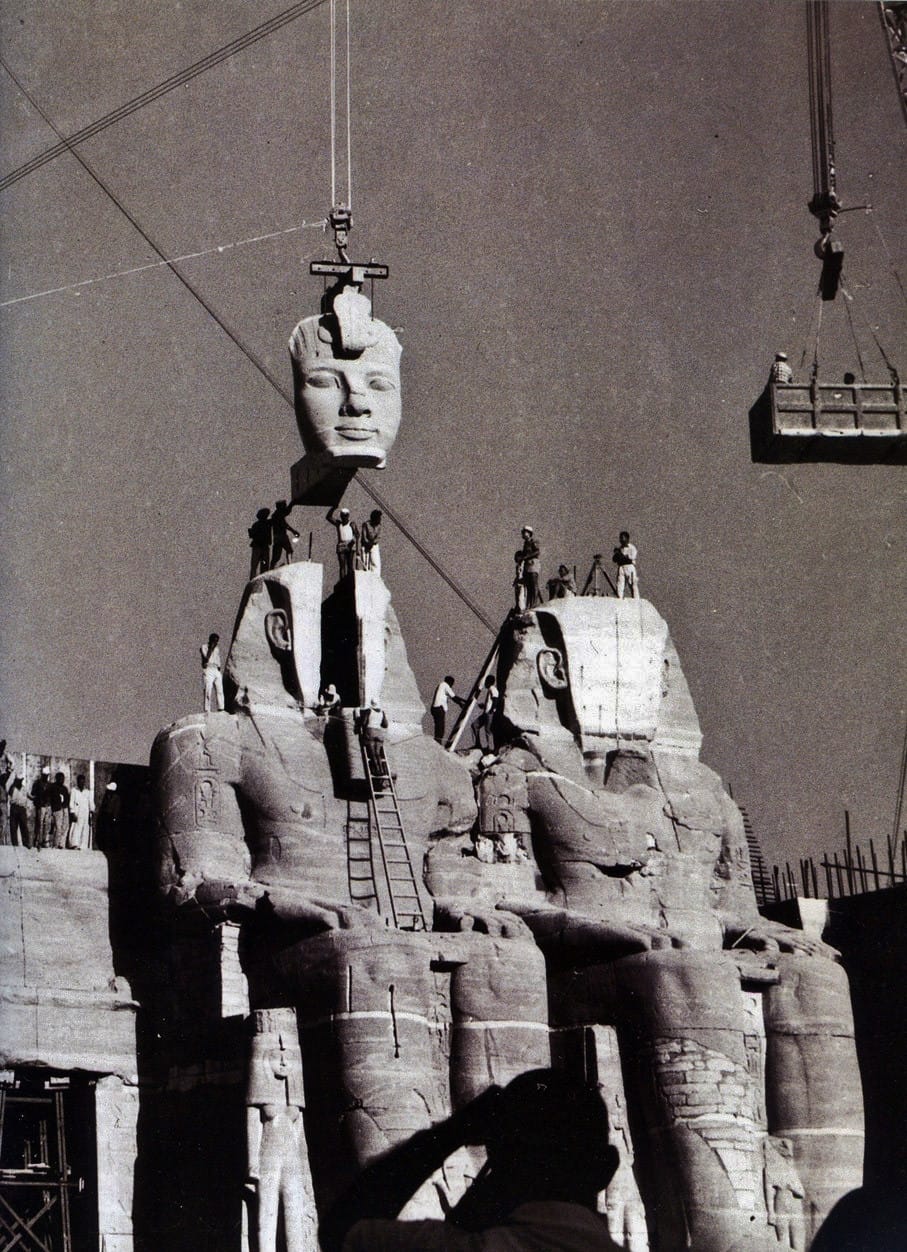
The scale alone is staggering, but what makes Abu Simbel truly extraordinary is its story of survival. In the 1960s, when the construction of the Aswan High Dam threatened to submerge the temples forever beneath the rising waters of Lake Nasser, UNESCO orchestrated one of the most ambitious rescue operations in history. The entire complex was cut into massive blocks, lifted piece by piece, and reassembled on higher ground 65 meters above the original site. The precision was so exact that twice a year, on February 22 and October 22, sunlight still penetrates the inner sanctum and illuminates three of the four statues at the back of the temple, just as the original builders intended over 3,200 years ago.
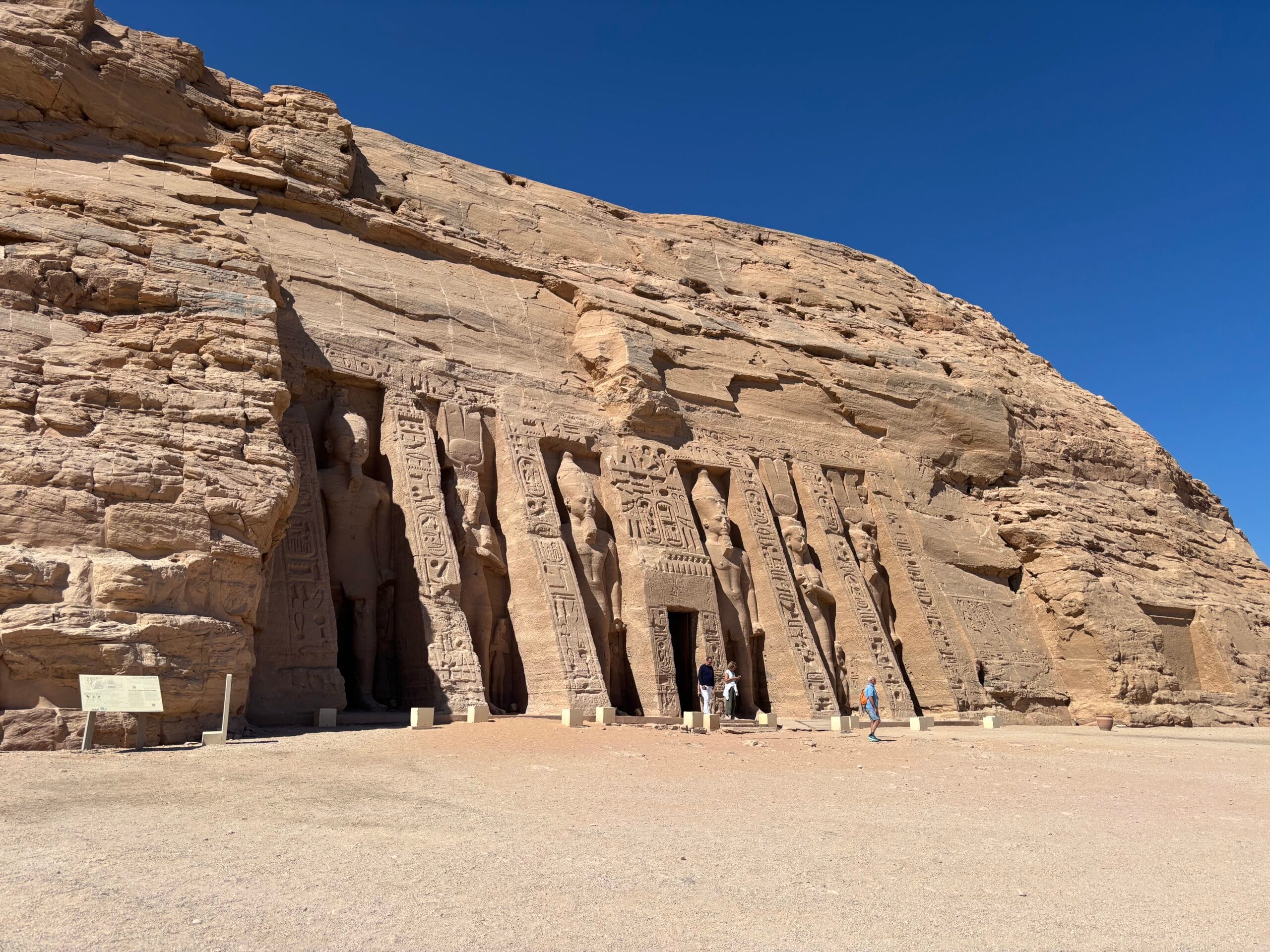
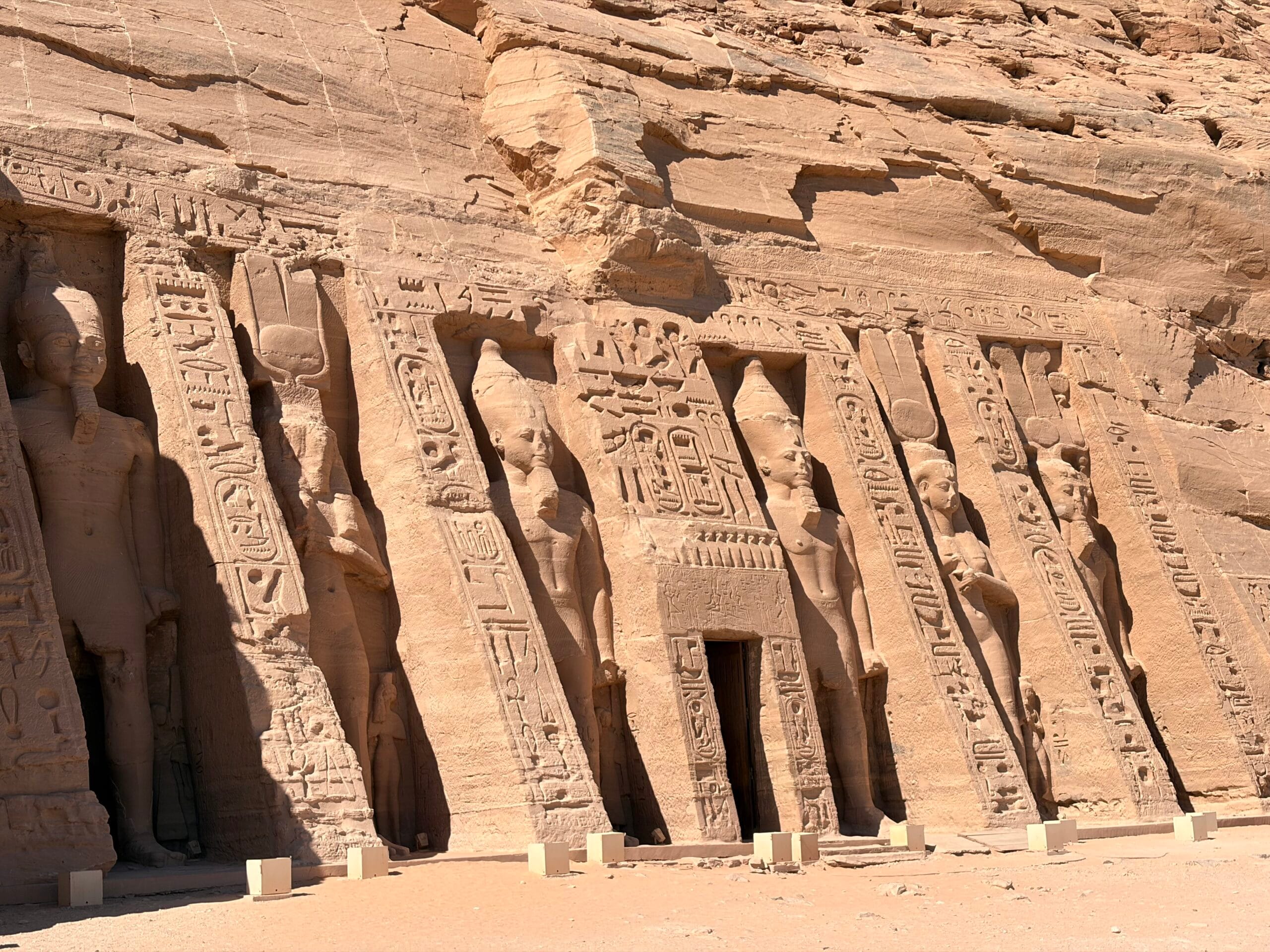
The smaller temple beside it, dedicated to Queen Nefertari and the goddess Hathor, is one of the very few temples in ancient Egypt built to honor a royal wife. Its facade features six standing statues, four of Ramesses and two of Nefertari, carved at equal height, a remarkable statement of the queen’s status.
Whether you arrive by road in the pre-dawn darkness or by a short flight from Aswan, that first moment when the facade comes into view across the desert is something no photograph can prepare you for.
Nothing prepares you for the sheer scale of the Great Temple facade. Four seated statues of Ramesses II, each over 20 meters tall, are carved directly into the cliff face. Smaller figures of family members stand between and beside his legs. The level of detail, from the double crown of Upper and Lower Egypt to the Nile god binding the Two Lands at the base, is extraordinary for sculptures of this size. Take your time. Walk close. Then step back and take it all in.
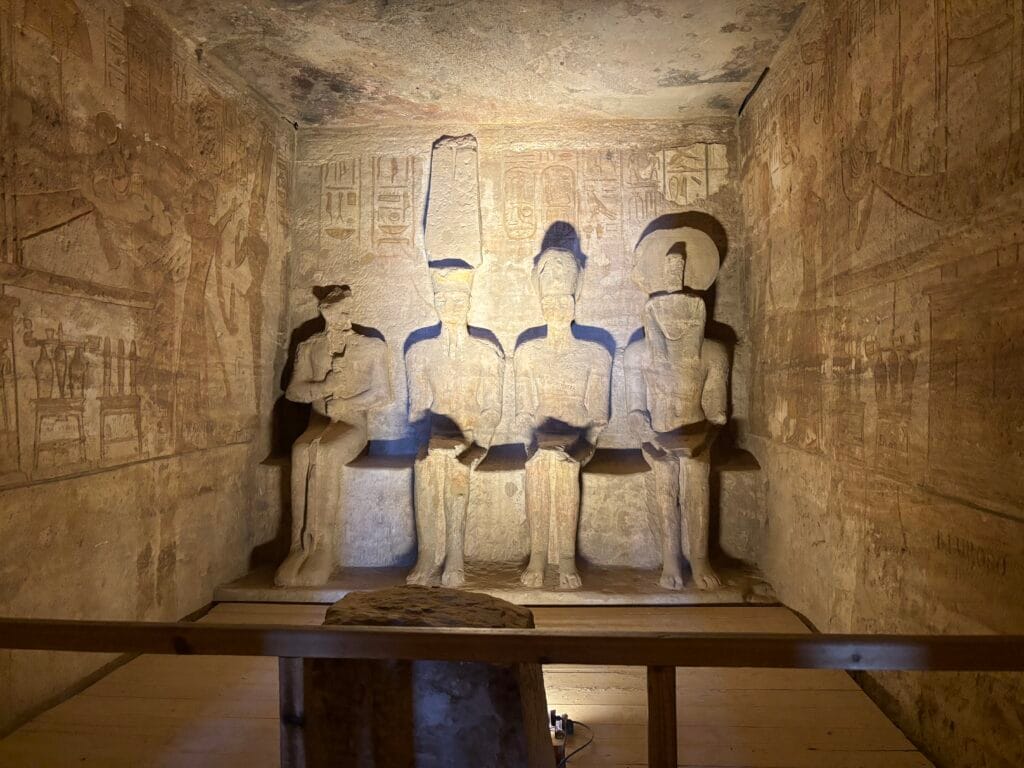
Pass through the entrance between the colossal statues and walk into the mountain. The interior is lined with eight Osiris pillars depicting Ramesses in the form of the god of the underworld. The walls are covered with reliefs showing his military victories, most famously the Battle of Kadesh. At the very back of the temple, the inner sanctum holds four seated figures: Ptah, Amun-Ra, Ramesses himself, and Ra-Horakhty. Twice a year, sunlight reaches this chamber and illuminates all but Ptah, the god of darkness.
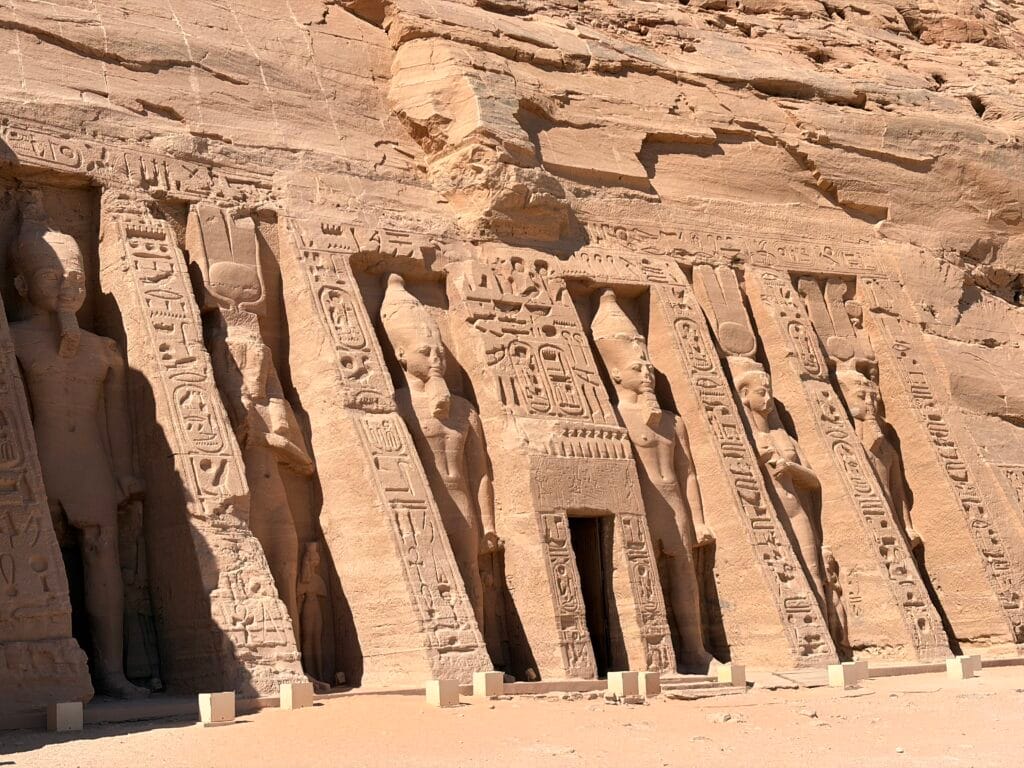
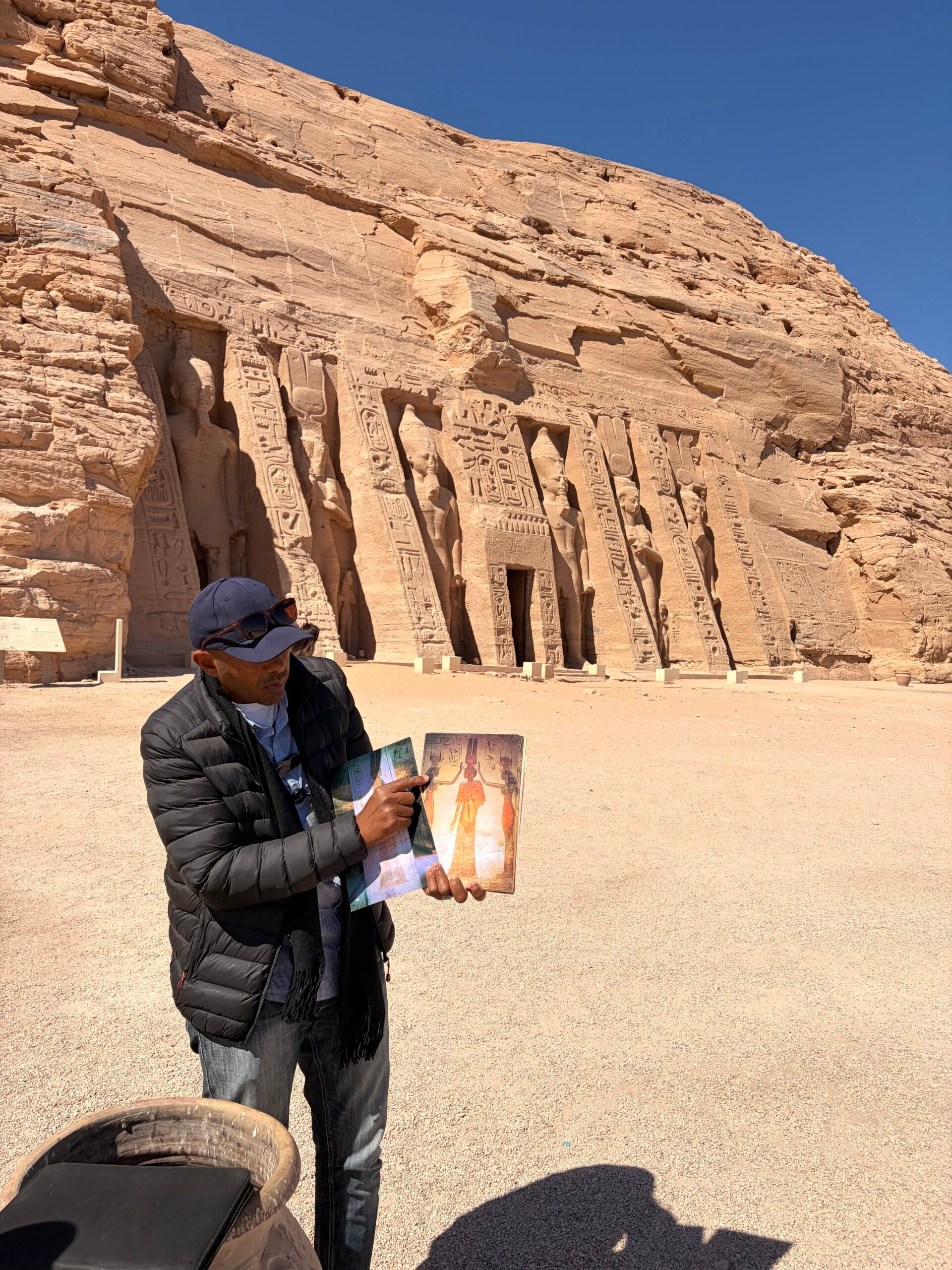
The smaller temple beside the Great Temple was built by Ramesses II for his beloved queen Nefertari, dedicated to the goddess Hathor. The facade features six standing statues, four of Ramesses and two of Nefertari, carved at the same height, an almost unprecedented honor in ancient Egypt. Inside, the walls depict scenes of Nefertari making offerings to the gods and standing alongside her husband as an equal. It is smaller and more intimate than the Great Temple, and many visitors find it equally moving.
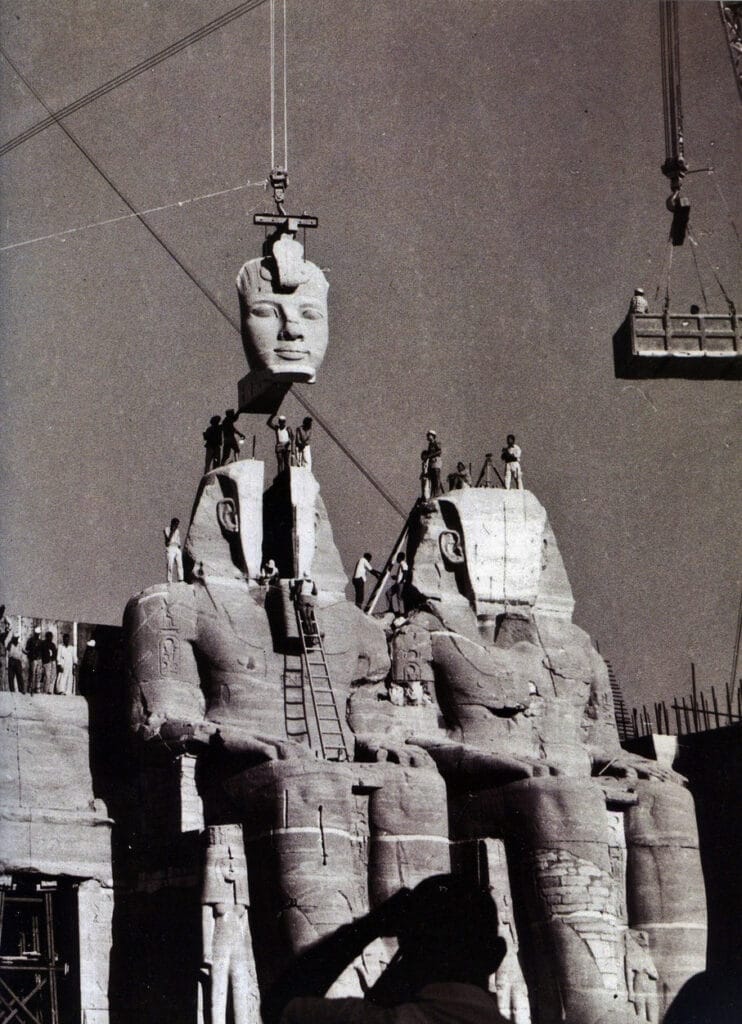
Between 1964 and 1968, an international team of engineers cut the entire Abu Simbel complex into over 1,000 blocks, some weighing up to 30 tons, and reassembled them on an artificial hill 65 meters above and 200 meters back from the original location. Information panels at the site explain the operation in detail. When you stand inside the temple and realize the entire mountain around you is man-made, the achievement becomes almost as impressive as the original construction.
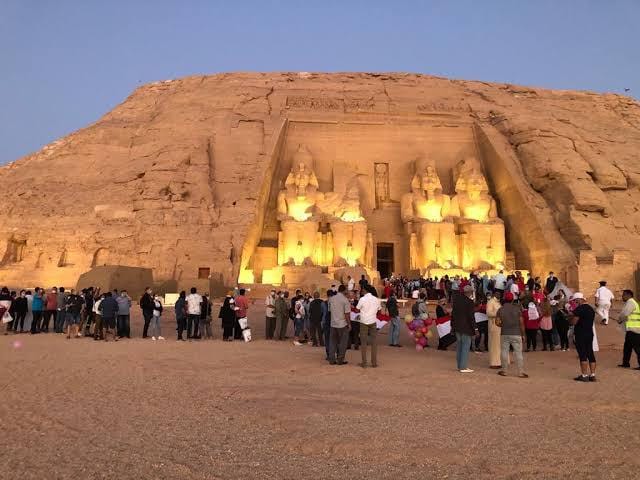
On February 22 and October 22 each year, the rising sun sends a beam of light through the temple entrance, down the 60-meter corridor, and into the inner sanctum, illuminating three of the four seated statues at the back. The phenomenon lasts about 20 minutes. These dates are believed to mark the birthday and coronation of Ramesses II. Thousands of visitors gather for the event, and a local festival with music and celebrations accompanies it. Book well in advance if you plan to visit on these dates.
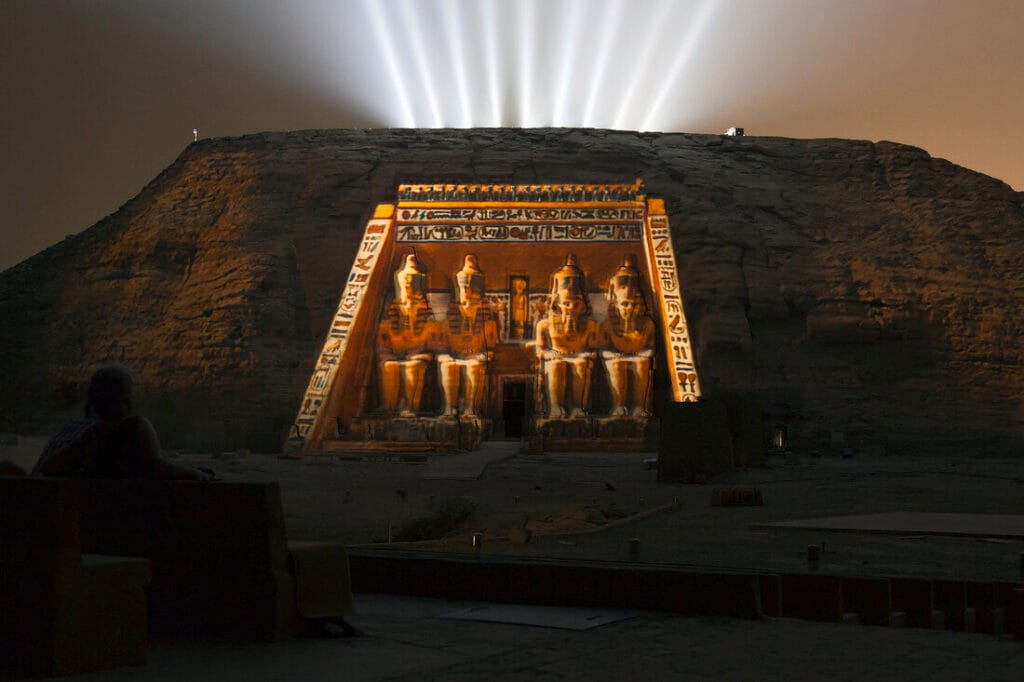
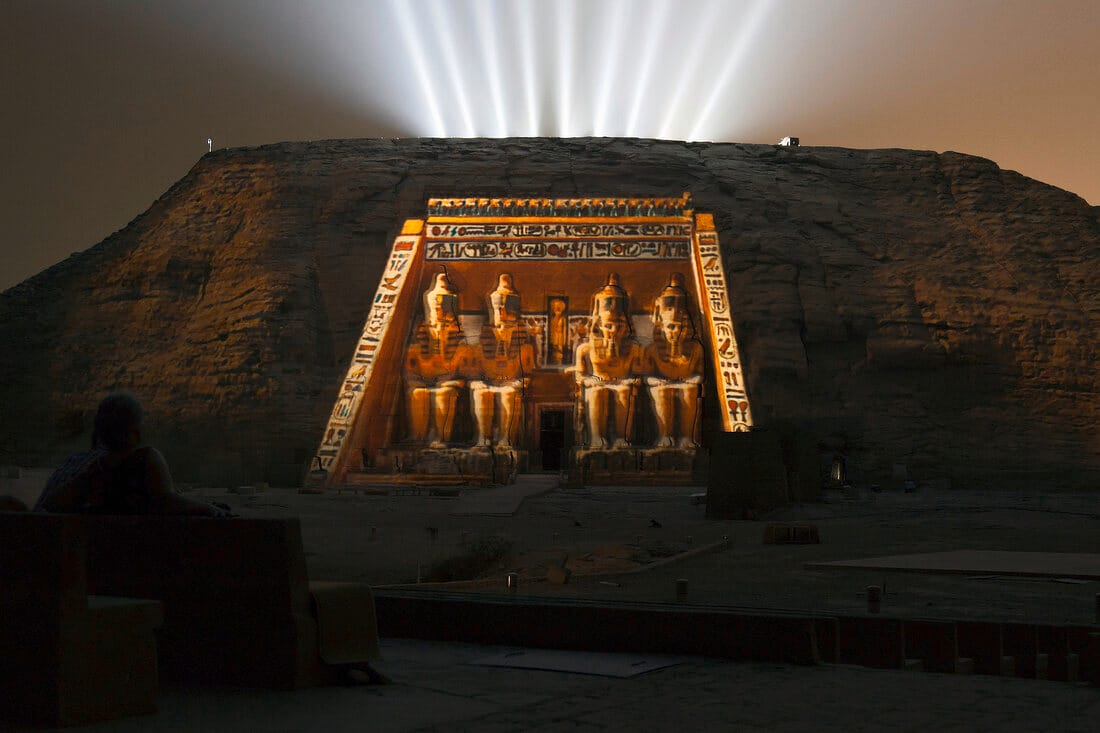
The Abu Simbel Sound and Light Show projects colored lights and narration onto the temple facades after dark, retelling the story of Ramesses II and the construction of the temples. It is smaller and more intimate than the Karnak show but the setting, with the temples glowing against the desert night sky and Lake Nasser behind you, is unforgettable. The show is only available if you stay overnight.
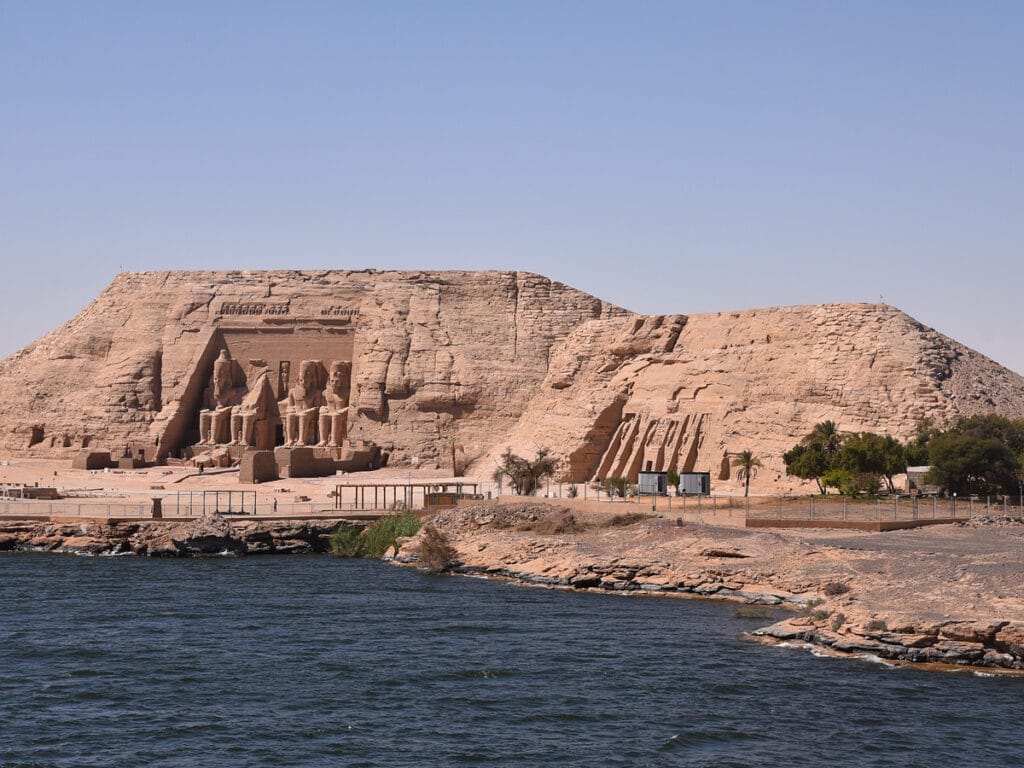
Lake Nasser, one of the largest artificial lakes in the world, stretches south from the temples toward Sudan. The deep blue water against the orange desert sand creates a dramatic landscape unlike anywhere else in Egypt. If you stay overnight, take an evening walk along the lakeshore. The silence and the scale of the empty desert around you are striking after the bustle of Aswan or Luxor.
October to March offers the most comfortable temperatures. The Sun Festival dates of February 22 and October 22 are special but crowded. Summer heat is extreme and not recommended for the outdoor visit.
November – February
★★★ Ideal
Comfortable daytime temperatures between 25 and 32 degrees. The most pleasant conditions for exploring the outdoor temple complex. The February 22 Sun Festival falls in this period. Peak Nile cruise season means more visitors at the site, but mornings (especially on the early road convoy) are still manageable.
March – April, October
★★ Good
Temperatures between 30 and 38 degrees. Mornings are still comfortable for visiting. October 22 brings the second Sun Festival alignment event. Fewer tourists than the winter peak, and hotel rates are lower. A good balance of weather and value.
May – September
★ Hot
Temperatures regularly exceed 45 degrees. Abu Simbel is in open desert with virtually no shade outside the temples. The early morning convoy helps, but the return drive in midday heat is grueling. Only for the most heat-tolerant travelers. If you must go in summer, the flight option from Aswan is strongly preferred over the road.
The most common way to visit Abu Simbel is by road from Aswan, a drive of approximately 3 hours each way through the Saharan desert. Convoys depart early, typically between 3 and 4 AM, to arrive at the temples by sunrise and avoid the midday heat. The road is well-paved and safe, crossing flat desert with occasional checkpoints. Your Empire Travel driver and guide handle all logistics.
EgyptAir operates daily flights from Aswan to Abu Simbel. The flight takes about 1 hour and the small airport is a 10-minute drive from the temples. This option is faster and avoids the early morning road departure, but is more expensive and offers less schedule flexibility. Flights tend to book out during Sun Festival dates.
Most visitors come on a day trip from Aswan, spending about 2 hours at the temples before the return drive. This is perfectly sufficient to see both temples thoroughly. However, staying overnight at one of the small hotels near the site lets you attend the Sound and Light Show, visit the temples in the quieter afternoon light, and experience the extraordinary silence of the desert after the day trippers leave. We recommend the overnight option for travelers who are not in a rush.
The February 22 and October 22 sun alignment events draw large crowds. Hotel rooms near Abu Simbel sell out weeks in advance, and the temple area is packed by dawn. If these dates are important to you, book as early as possible. The alignment phenomenon is visible for a few days either side of the exact dates, with slightly less precision, and far fewer crowds.
The desert around Abu Simbel is hot and dry with no shade outside the temples. Bring plenty of water, a hat, sunscreen, and sunglasses. If visiting on the early morning road trip, bring a blanket or warm layer for the cold pre-dawn drive (desert nights are surprisingly cold). A camera is essential, but flash photography is prohibited inside the temples.
Allow about 1.5 to 2 hours at the site to explore both temples thoroughly without rushing. If you are a history or photography enthusiast, you could easily spend 3 hours. The site is compact and flat, with a short walk between the two temples.
Without question. Abu Simbel is consistently ranked as one of the most impressive archaeological sites in the world. The scale of the colossal statues, the detail of the interior reliefs, and the story of the UNESCO relocation make it unlike anything else in Egypt. The early morning departure is tiring, but the moment the facade comes into view across the desert, every traveler agrees it was worth it.
Most visitors spend 1.5 to 2 hours at the site, which is enough to explore both temples thoroughly and take photos. History and photography enthusiasts may want closer to 3 hours. The site is compact with a short walk between the two temples. If you stay overnight, you can revisit in the afternoon when day trippers have left.
The road trip is the most popular option and is included in most tour packages. The drive takes about 3 hours each way through dramatic Saharan desert. Convoys depart around 3 to 4 AM and return by early afternoon. Flying takes 1 hour each way but is more expensive and less flexible with scheduling. For travelers short on time or uncomfortable with the early start, flying is a good alternative. For the full experience, the road trip is part of the adventure.
Yes. There are a few small hotels near the temples. Staying overnight lets you attend the Sound and Light Show in the evening and visit the temples again the next morning without the rush of the day trip convoy. It also lets you experience the extraordinary silence of the desert at night. We recommend the overnight option for travelers who want a more relaxed and immersive experience.
Twice a year, on February 22 and October 22, the rising sun sends a beam of light through the entire length of the Great Temple and illuminates three of the four statues in the inner sanctum. The phenomenon lasts about 20 minutes and is believed to mark the birthday and coronation of Ramesses II. A local festival with music, dancing, and food accompanies the event. These dates are extremely popular, so book accommodation and transport well in advance.
Yes. The road between Aswan and Abu Simbel has security checkpoints and the convoy system ensures safe passage. The temple site itself has a tourist police presence. The area around Abu Simbel is remote desert with a small town, and visitors report feeling completely safe. All Empire Travel Abu Simbel excursions include experienced drivers familiar with the route.
Photography is allowed inside both temples, but flash photography is strictly prohibited. The interior lighting is dim, so a camera that handles low-light conditions well is helpful. Tripods are generally not permitted. The exterior statues can be photographed freely and are best in the early morning light when the facade faces east toward the rising sun.
Abu Simbel is remote and the temples are the main attraction. However, if you stay overnight, walking along the shore of Lake Nasser at sunset is beautiful, and the small town has a few simple restaurants serving local Nubian food. Some operators offer Lake Nasser fishing trips or boat excursions. For most visitors, the temples themselves provide more than enough to fill a visit.