
Pyramids of Egypt: Facts vs Myths | What Science Actually Proves
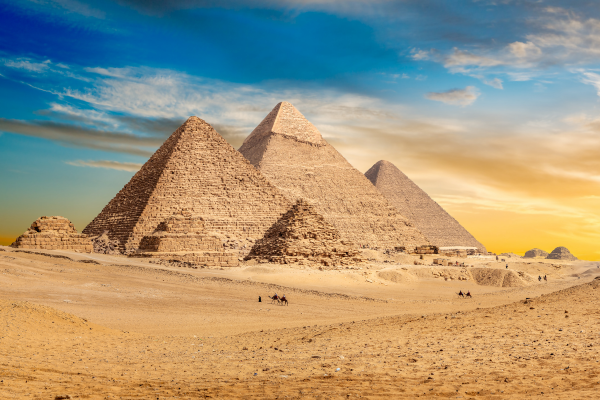
The Pyramids of Egypt are among the most extraordinary achievements in human history. Rising from the Giza Plateau on the edge of the Sahara, these monuments have dominated the landscape for more than 4,500 years. Despite being some of the most studied structures on Earth, they are still surrounded by misconceptions, exaggerated claims, and popular myths.
Modern archaeology and scientific research now allow us to separate fact from fiction. What we know today about the pyramids is not only clearer than ever before, it is often more impressive than the legends themselves.
This guide explores the proven facts, addresses the most common myths, and explains what science has actually confirmed about the pyramids of Egypt.
The pyramids were built during Egypt’s Old Kingdom, roughly between 2600 and 2500 BCE, a period often described as the golden age of pyramid construction. This era was marked by political stability, strong centralized authority, and agricultural prosperity, all of which made large-scale construction possible.
The primary purpose of the pyramids was funerary. They were designed as eternal tombs for Egypt’s pharaohs, who were believed to be divine rulers. Ancient Egyptians believed that preserving the pharaoh’s body and providing a monumental resting place were essential for ensuring a successful journey to the afterlife.
The pyramid shape itself carried symbolic meaning. Many scholars believe it represented either the primordial mound of creation or the sun’s rays, connecting the pharaoh directly to the sun god Ra.
The most famous pyramids belong to three generations of one royal family:
Khufu (the Great Pyramid)
Khafre
Menkaure
All three stand on the Giza Plateau and were constructed within a relatively short span of time.
One of the most persistent myths is that the pyramids were built by slaves. Archaeological evidence clearly disproves this.
Excavations near Giza have uncovered workers’ villages complete with housing, bakeries, breweries, and medical facilities. Skeletal remains show signs of healed injuries, indicating that workers received medical care. Written records and inscriptions suggest that laborers were paid in food, beer, and goods.
Graffiti found inside the pyramids reveals the names of work crews, such as “Friends of Khufu” and “Drunkards of Menkaure.” These inscriptions suggest pride, organization, and a strong team identity rather than forced labor.
The workforce likely consisted of:
Skilled permanent workers such as engineers, masons, and surveyors
Seasonal laborers, mainly farmers working during the Nile flood season
At any given time, an estimated 20,000 to 30,000 people were involved in construction.
The pyramids were built without iron tools, modern machinery, or cranes. Instead, ancient Egyptians relied on practical engineering, mathematics, and careful organization.
Most of the limestone blocks were quarried directly from the Giza Plateau. Higher-quality white limestone used for the outer casing came from Tura, while red granite used inside the pyramids was transported from Aswan, more than 800 kilometers away.
Stone blocks were moved using:
Wooden sledges
Ropes
Wet sand to reduce friction
Transportation was closely tied to the Nile. During the annual flood, boats could bring heavy materials close to the construction site using canals and temporary harbors.
How the stones were raised remains debated, but most scholars agree that ramp systems were used. These may have included straight ramps, zigzag ramps, or spiraling ramps depending on the stage of construction.
The Great Pyramid is estimated to have taken 20 to 25 years to complete.
The Great Pyramid of Khufu was originally about 481 feet (146 meters) tall and is aligned with the cardinal directions with astonishing accuracy. Its orientation deviates from true north by less than one-twentieth of a degree.
The pyramid’s base is also remarkably level, with variations of only a few centimeters across an area of over 13 acres. This likely required advanced surveying methods, possibly using water channels to establish a flat reference plane.
These achievements demonstrate not mysterious technology, but a deep understanding of astronomy, geometry, and engineering.
The interior of the Great Pyramid is deceptively complex. It includes:
The Grand Gallery, a soaring corbelled passage
The so-called Queen’s Chamber, which likely had a symbolic function
The King’s Chamber, containing a granite sarcophagus
Above the King’s Chamber are five relieving chambers designed to distribute weight and prevent collapse. Narrow shafts extending from the chambers may have had religious significance, possibly linked to the pharaoh’s journey to the stars.
Although no intact royal mummy has been found inside a pyramid, widespread looting in antiquity explains their absence.
The Giza Plateau was an ideal location for several reasons:
Strong limestone bedrock capable of supporting massive weight
Proximity to the Nile for transportation
Religious symbolism of the west bank, associated with death and the afterlife
Visibility from Memphis, the Old Kingdom capital
Giza represented the perfect blend of practicality, religion, and political power.
Myth: The Pyramids Were Built by Aliens or Lost Civilizations
Reality: Archaeological evidence clearly shows human construction, gradual development, and experimental design evolution.
Myth: Unknown Advanced Technology Was Used
Reality: Simple tools combined with smart engineering, mathematics, and labor organization were sufficient.
Myth: The Pyramids Were Not Tombs
Reality: Pyramid texts, burial architecture, and surrounding mortuary complexes confirm their funerary purpose.
Myth: Hidden Codes and Prophecies Are Embedded in the Pyramids
Reality: Many such claims rely on selective measurements and modern reinterpretations rather than ancient intent.
The pyramids are more than ancient tombs. They are:
A testament to human ingenuity and cooperation
Ongoing archaeological research sites
One of the world’s most important cultural landmarks
Modern technologies such as muon scanning and infrared imaging continue to reveal new internal features, proving that these monuments still have stories to tell.
Seeing the pyramids in person offers a sense of scale and history that no image can convey. Walking through the plateau, standing beneath stones weighing several tons, and entering passages built millennia ago creates a powerful connection to the past.
Visiting with an expert guide enhances the experience, providing context, historical accuracy, and insight into recent discoveries.
Understanding the pyramids becomes even more meaningful when fact replaces fiction. Our tours to the Pyramids of Giza are designed to combine comfort, expert Egyptologist guidance, and deep historical insight.
Explore the pyramids with confidence, clarity, and context, and experience one of humanity’s greatest achievements exactly as it deserves to be seen.
Tours featuring the Pyramids of Giza and ancient Egypt’s most important sites:
Full day Pyramids of Giza & the Grand Egyptian Museum
Giza Pyramids, Sphinx, Memphis & Sakkara Full-Day Tour
Full Day Pyramids of Giza & the National Museum of Egyptian Civilization