Citadel of Qaitbay Alexandria: Medieval Fortress & Lighthouse Site
Discover the Citadel of Qaitbay, Alexandria's stunning medieval fortress perched on the Mediterranean coast. Built in 1477 by Sultan Al-Ashraf Qaitbay using stones from the collapsed Pharos Lighthouse, this architectural marvel connects ancient wonder with Islamic heritage. Explore the fortress walls, Naval Museum, and panoramic sea views while standing on the site of one of the Seven Wonders of the Ancient World.
Location: Egypt, Alexandria
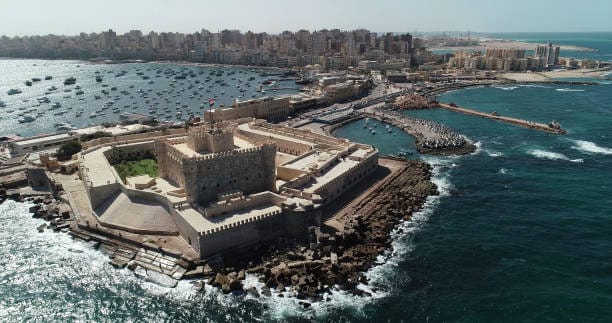
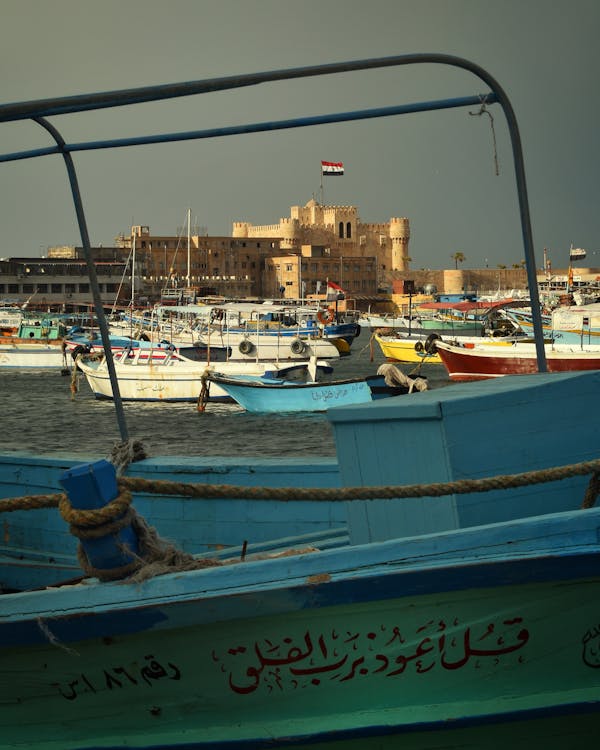
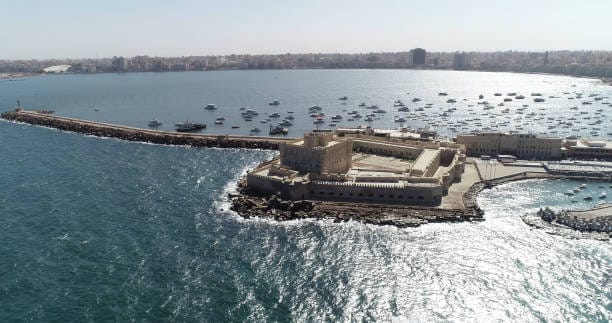
Standing proudly on a narrow peninsula jutting into the Mediterranean Sea, the Citadel of Qaitbay is one of Alexandria’s most iconic landmarks and a testament to Egypt’s rich Islamic heritage. This impressive 15th-century fortress, built on the exact site where the legendary Lighthouse of Alexandria once stood, connects Egypt’s ancient wonders with its medieval history in one spectacular location.
Standing proudly on a narrow peninsula jutting into the Mediterranean Sea, the Citadel of Qaitbay is one of Alexandria’s most iconic landmarks and a testament to Egypt’s rich Islamic heritage. This impressive 15th-century fortress, built on the exact site where the legendary Lighthouse of Alexandria once stood, connects Egypt’s ancient wonders with its medieval history in one spectacular location.
A Fortress Built on Ancient Foundations
The Legend of the Pharos Lighthouse
Before Sultan Al-Ashraf Qaitbay constructed his fortress in 1477 AD, this strategic peninsula was home to one of the Seven Wonders of the Ancient World—the Pharos Lighthouse of Alexandria. Built around 280 BC during the Ptolemaic period, this towering beacon guided ships into Alexandria’s harbor for nearly 1,600 years, standing approximately 100-130 meters tall and visible from up to 50 kilometers at sea.
The lighthouse survived until a series of devastating earthquakes between the 10th and 14th centuries gradually destroyed this architectural marvel. By the time Sultan Qaitbay arrived in Alexandria in 1477, the lighthouse had been reduced to ruins, its massive stone blocks scattered across the peninsula and seafloor.
From Ancient Wonder to Medieval Fortress
Sultan Qaitbay, recognizing the strategic importance of this location, ordered the construction of a defensive fortress using the very limestone blocks from the collapsed lighthouse. This brilliant act of architectural recycling meant that pieces of one of humanity’s greatest ancient structures became the foundation of a new monument. When you touch the walls of Qaitbay Citadel today, you’re quite literally touching stones that once formed the legendary Pharos Lighthouse.
Architecture and Design
Islamic Military Architecture at Its Finest
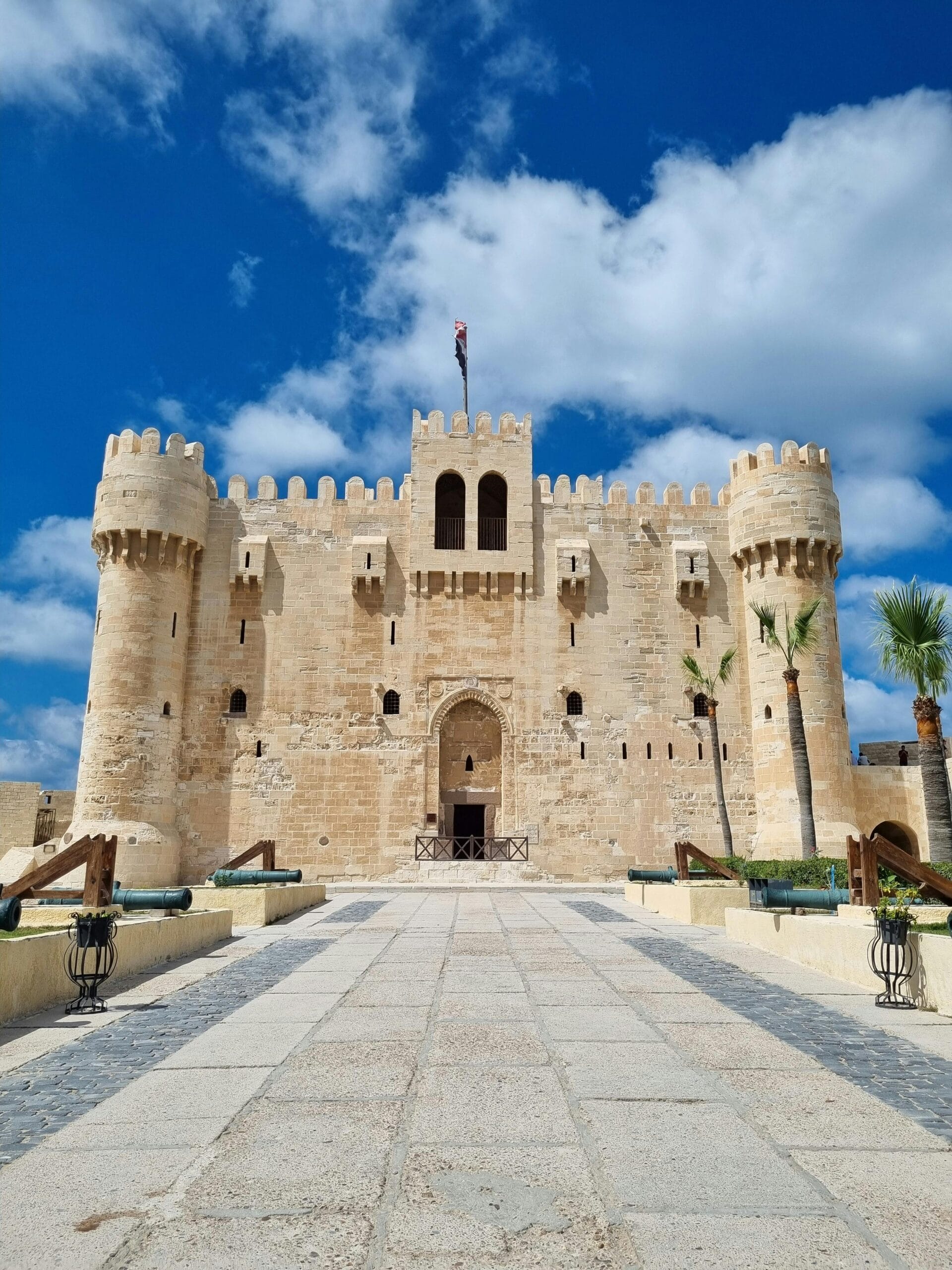
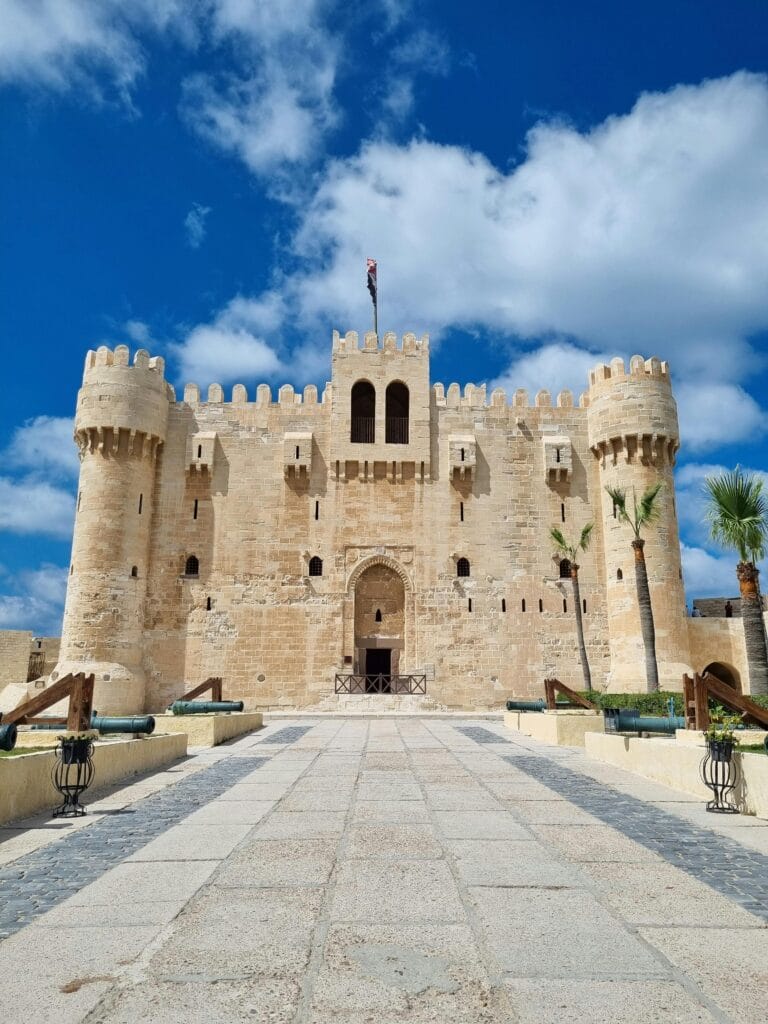
The Citadel of Qaitbay exemplifies Mamluk military architecture, designed to defend Egypt’s Mediterranean coast from the expanding Ottoman Empire. The fortress features:
- Massive defensive walls made of limestone, some blocks clearly showing ancient Greek and Roman carvings from the original lighthouse
- Cylindrical corner towers providing 360-degree visibility and firing positions
- Crenellated battlements (merlons) along the walls for archers and defenders
- A central keep rising three stories, housing the main defensive position and commander’s quarters
- Arrow slits and machicolations strategically positioned for defending against naval and land attacks
- An inner courtyard where troops could assemble and supplies could be stored
The fortress’s angular design and strategic placement gave defenders clear sightlines across the harbor and surrounding waters, making it nearly impregnable to naval attack.
The Main Tower
The citadel’s central tower, standing at the fortress’s highest point, served multiple purposes:
- Command center during military operations
- Observation post for monitoring ship traffic
- Lighthouse function (ironically, the fortress became a lighthouse again)
- Storage for weapons and ammunition
Today, visitors can climb to the top of this tower for breathtaking panoramic views of Alexandria’s Eastern Harbor, the Mediterranean Sea stretching to the horizon, and the modern city skyline.
What to See at Qaitbay Citadel
The Naval Museum
Housed within the fortress walls, the Naval Museum showcases Egypt’s rich maritime history, including:
- Ancient Egyptian ship models and navigation instruments
- Greco-Roman maritime artifacts recovered from Alexandria’s underwater archaeology sites
- Islamic-period naval equipment and weapons
- Modern Egyptian Navy history
- Fascinating displays about underwater excavations searching for Pharos Lighthouse remains
The Mosque
A small but beautiful mosque within the citadel complex serves as a reminder that this military fortress was also a place of worship for the garrison soldiers. The mosque features classic Mamluk architectural elements and provides a peaceful contrast to the fortress’s martial character.
The Battlements and Ramparts
Walking along the fortress walls offers:
- Spectacular Mediterranean Sea views
- Understanding of medieval defensive strategies
- Photography opportunities from multiple angles
- Fresh sea breezes and the sound of waves crashing against the ancient stones
Historic Cannons
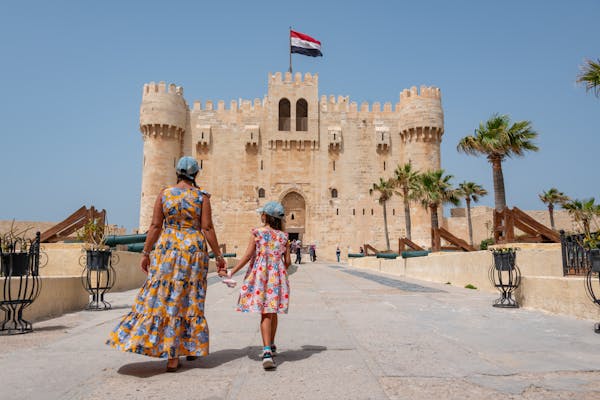
Original bronze cannons from various periods line the entrance courtyard and defensive positions, some dating back to the fortress’s active military days. These weapons provide tangible evidence of the citadel’s role in defending Egypt’s northern coast.
The Underwater Connection
The Sunken City
One of the most exciting aspects of visiting Qaitbay Citadel is knowing what lies beneath the waves. The waters surrounding the peninsula contain one of the world’s most significant underwater archaeological sites, with:
- Massive column drums from the ancient lighthouse
- Colossal statues of pharaohs and Ptolemaic rulers
- Sphinx sculptures
- Obelisks and architectural elements
- Ancient harbor structures and quays
French archaeologist Jean-Yves Empereur led groundbreaking underwater expeditions in the 1990s that discovered over 3,000 architectural fragments from the Pharos Lighthouse on the seafloor. These discoveries confirmed that the fortress was indeed built on and from the ruins of the ancient wonder.
While the underwater ruins are accessible only to licensed divers, several museums in Alexandria display artifacts recovered from these submerged sites, and the knowledge that you’re standing directly above one of history’s greatest lost monuments adds profound depth to any visit.
Best Time to Visit
Seasonal Considerations
Spring (March-May): Ideal weather with mild temperatures (18-25°C), perfect for exploring without summer heat.
Summer (June-August): Hot but tempered by Mediterranean breezes. Crowded with Egyptian domestic tourists. Best visited early morning or late afternoon.
Fall (September-November): Excellent weather returns, fewer crowds than summer, comfortable exploration conditions.
Winter (December-February): Mild temperatures (12-18°C) but occasional rain and wind. Fewer tourists, more atmospheric with dramatic seas.
Time of Day
Sunrise: Magical light, virtually empty, best for photography.
Midday: Full light for seeing architectural details, but can be hot in summer.
Late Afternoon/Sunset: Golden hour photography, cooler temperatures, romantic atmosphere as the sun sets over the Mediterranean.
Practical Information
Location and Access
The Citadel of Qaitbay is located at the eastern end of the Corniche in the Anfushi neighborhood of Alexandria, approximately:
- 2.5 hours’ drive from Cairo (220 km)
- 20 minutes from Alexandria city center
- Walking distance from Alexandria’s other attractions along the Corniche
Entry and Visiting Hours
- Opening hours: Typically 9:00 AM – 8:00 PM (hours may vary seasonally)
- Entry fees: Modest admission fee (separate ticket for Naval Museum)
- Photography: Allowed (some restrictions inside museum)
- Accessibility: Limited for wheelchairs due to historic architecture with stairs
What to Bring
- Comfortable walking shoes (uneven stone surfaces)
- Sun protection (hat, sunscreen, sunglasses)
- Camera for spectacular Mediterranean views
- Light jacket if visiting in winter (sea breezes)
- Water bottle (limited facilities inside)
Combining Your Visit
The Citadel of Qaitbay works beautifully as part of a comprehensive Alexandria day trip. Consider combining it with:
Nearby Attractions:
- Bibliotheca Alexandrina (modern architectural marvel, 3 km)
- Catacombs of Kom el Shoqafa (ancient underground necropolis, 4 km)
- Roman Amphitheater (2 km)
- Montaza Palace Gardens (8 km)
- Alexandria National Museum (2 km)
The Perfect Day in Alexandria:
- Morning: Citadel of Qaitbay + Naval Museum
- Lunch: Fresh seafood along the Corniche
- Afternoon: Bibliotheca Alexandrina or Catacombs of Kom el Shoqafa
- Evening: Stroll along the Corniche at sunset
Why Visit Qaitbay Citadel?
Historical Significance
You’re standing on the site of one of the Seven Wonders of the Ancient World, touching stones that formed that ancient lighthouse, and exploring a fortress that defended Egypt for centuries.
Architectural Beauty
The harmonious blend of Mamluk military design with Mediterranean coastal setting creates stunning visual appeal from every angle.
Panoramic Views
Few locations in Egypt offer such breathtaking sea views combined with historical depth. The 360-degree vistas from the ramparts are unforgettable.
Photo Opportunities
From dramatic fortress walls against crashing waves to sunset silhouettes, Qaitbay offers endless photography possibilities.
Cultural Connection
The citadel represents Egypt’s Islamic heritage and medieval history, providing important context beyond the country’s more famous pharaonic monuments.
Experience Qaitbay with Empire Travel
Empire Travel offers comprehensive Alexandria tours from Cairo that include the Citadel of Qaitbay alongside other Mediterranean coast highlights. Our expert guides bring the fortress’s layered history to life, explaining the connection between the ancient Pharos Lighthouse and the medieval fortress, pointing out architectural details you might miss on your own, and ensuring you capture perfect photos from the best viewpoints.
Tour Options:
- Alexandria Day Trip from Cairo: Full-day excursion visiting Qaitbay Citadel, Bibliotheca Alexandrina, Catacombs, and lunch along the Corniche
- Extended Alexandria Tours: Overnight stays allowing deeper exploration of the city’s Greco-Roman and Islamic heritage
- Custom Itineraries: Combine Alexandria with Cairo’s attractions (Pyramids, Egyptian Museum, NMEC) for comprehensive Egypt experiences
All tours include:
- Modern, air-conditioned transportation
- Professional, licensed Egyptologist guides
- Skip-the-line assistance where available
- Flexible pacing for photography and exploration
- Hotel pickup and drop-off
Since 1987, Empire Travel has specialized in creating memorable Egyptian experiences, helping visitors connect with the country’s incredible history while ensuring comfort, safety, and genuine cultural encounters.
Ready to explore where ancient wonder meets medieval fortress? Contact us today to plan your Alexandria adventure and stand on the legendary site of the Pharos Lighthouse at the magnificent Citadel of Qaitbay.
Attraction Gallery
Frequently Asked Questions (FAQs)
The Citadel of Qaitbay is located in Alexandria, Egypt, on a narrow peninsula at the eastern end of the Eastern Harbor in the Anfushi neighborhood. It sits on the exact site where the ancient Pharos Lighthouse (one of the Seven Wonders of the Ancient World) once stood. The citadel is approximately 220 kilometers (2.5 hours’ drive) from Cairo and about 20 minutes from Alexandria’s city center.
The Citadel of Qaitbay was built in 1477 AD by Mamluk Sultan Al-Ashraf Qaitbay. The fortress was constructed using limestone blocks salvaged from the ruins of the collapsed Pharos Lighthouse, which had been destroyed by earthquakes between the 10th and 14th centuries. This means the citadel’s walls literally contain stones from one of the Seven Wonders of the Ancient World.
The Citadel of Qaitbay is typically open daily from 9:00 AM to 8:00 PM, though hours may vary seasonally. There is a modest entrance fee for the citadel, with a separate ticket required for the Naval Museum inside. Prices are subject to change, so contact Empire Travel for current admission fees and to book guided tours that include skip-the-line assistance.
Yes! The Citadel of Qaitbay is perfect for a day trip from Cairo. The drive takes approximately 2.5 hours each way along the Alexandria Desert Road. Empire Travel offers comprehensive Alexandria day tours from Cairo that include the Citadel of Qaitbay along with other major attractions like the Bibliotheca Alexandrina, Catacombs of Kom el Shoqafa, and lunch along the Mediterranean Corniche. Tours include comfortable air-conditioned transportation, expert guides, and hotel pickup/drop-off. Check out this day tour from Cairo.
Also, check this multi-day travel package out that includes a visit to the Citadel.
The Citadel of Qaitbay was built on the exact location where the legendary Pharos Lighthouse stood for nearly 1,600 years. After earthquakes destroyed the lighthouse, Sultan Qaitbay ordered a fortress built on the site using the lighthouse’s fallen stones. Underwater archaeological excavations have discovered over 3,000 architectural fragments from the ancient lighthouse on the seafloor surrounding the citadel, confirming this historic connection between ancient wonder and medieval fortress.
Inside the citadel, visitors can explore:
- The main fortress with its defensive towers, battlements, and ramparts
- The Naval Museum showcasing Egypt’s maritime history and underwater discoveries
- A small mosque within the fortress walls
- Historic cannons from various periods
- Panoramic viewpoints from the top of the central tower offering spectacular Mediterranean Sea views
- Architectural details showing Mamluk Islamic military design and stones from the ancient Pharos Lighthouse
Plan to spend approximately 1.5 to 2 hours at the Citadel of Qaitbay for a thorough visit. This allows time to explore the fortress interior and Naval Museum, walk along the ramparts, climb the tower for panoramic views, take photos, and learn about the site’s history. If you’re visiting as part of a full Alexandria day tour, the citadel typically represents one stop among several attractions.
Yes, photography is allowed throughout most of the Citadel of Qaitbay, including the ramparts, courtyard, and exterior. Some restrictions may apply inside the Naval Museum for artifact preservation. The citadel offers exceptional photography opportunities including:
- Dramatic fortress walls against crashing Mediterranean waves
- Sunset silhouettes with ancient stonework
- Panoramic sea views from the ramparts
- Architectural details of Mamluk design
- Historic cannons and defensive features
The Citadel of Qaitbay combines beautifully with other Alexandria attractions for a full day:
- Bibliotheca Alexandrina (modern architectural marvel, 3 km away)
- Catacombs of Kom el Shoqafa (ancient underground necropolis, 4 km)
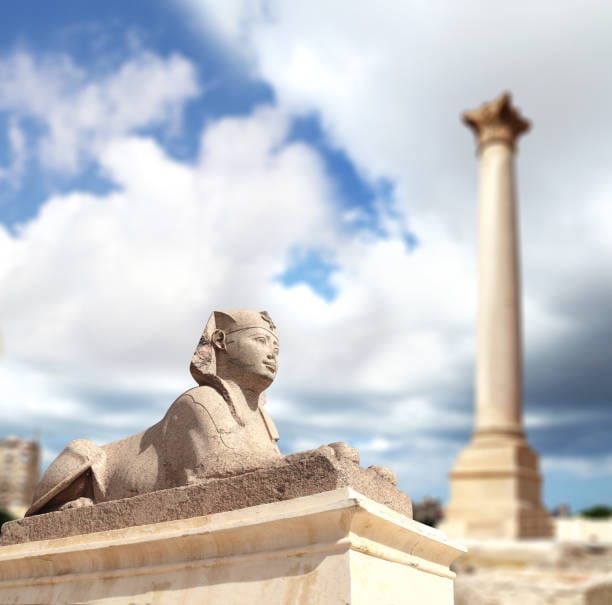
- Pompey’s Pillar and Roman ruins
- Alexandria National Museum
- Montaza Palace Gardens (8 km along the Corniche)
- Roman Amphitheater
Empire Travel’s Alexandria day tours are designed to show you the best combination of these sites in one comprehensive visit.
While you can visit independently, having an expert Egyptologist guide significantly enhances the experience. Guides can:
- Explain the connection between the ancient Pharos Lighthouse and the medieval fortress
- Point out architectural details and stones from the original lighthouse
- Share historical context about the Mamluk period and maritime defense
- Navigate you to the best viewpoints for photography
- Provide insights about underwater archaeological discoveries
- Answer questions about Egyptian history and culture
Empire Travel’s guided tours include licensed, knowledgeable guides who bring the citadel’s layered history to life.
Yes, the Citadel of Qaitbay is generally family-friendly and fascinating for children who enjoy castles, fortresses, and adventure. Kids typically love:
- Exploring the fortress walls and towers
- Seeing historic cannons
- Climbing to viewpoints
- Learning about knights and defenders (medieval history)
- The dramatic seaside setting
However, parents should supervise children carefully on the ramparts and stairs. The site involves walking, climbing, and uneven surfaces, so it’s best suited for children who can walk comfortably for extended periods.
- Comfortable walking shoes (stone surfaces can be uneven)
- Sun protection (hat, sunscreen, sunglasses)
- Water bottle (stay hydrated, especially in summer)
- Camera or smartphone for photos
- Light jacket if visiting in winter (sea breezes can be cool)