
Coptic and Islamic Cairo: A Guide to Old Cairo’s Historic Treasures
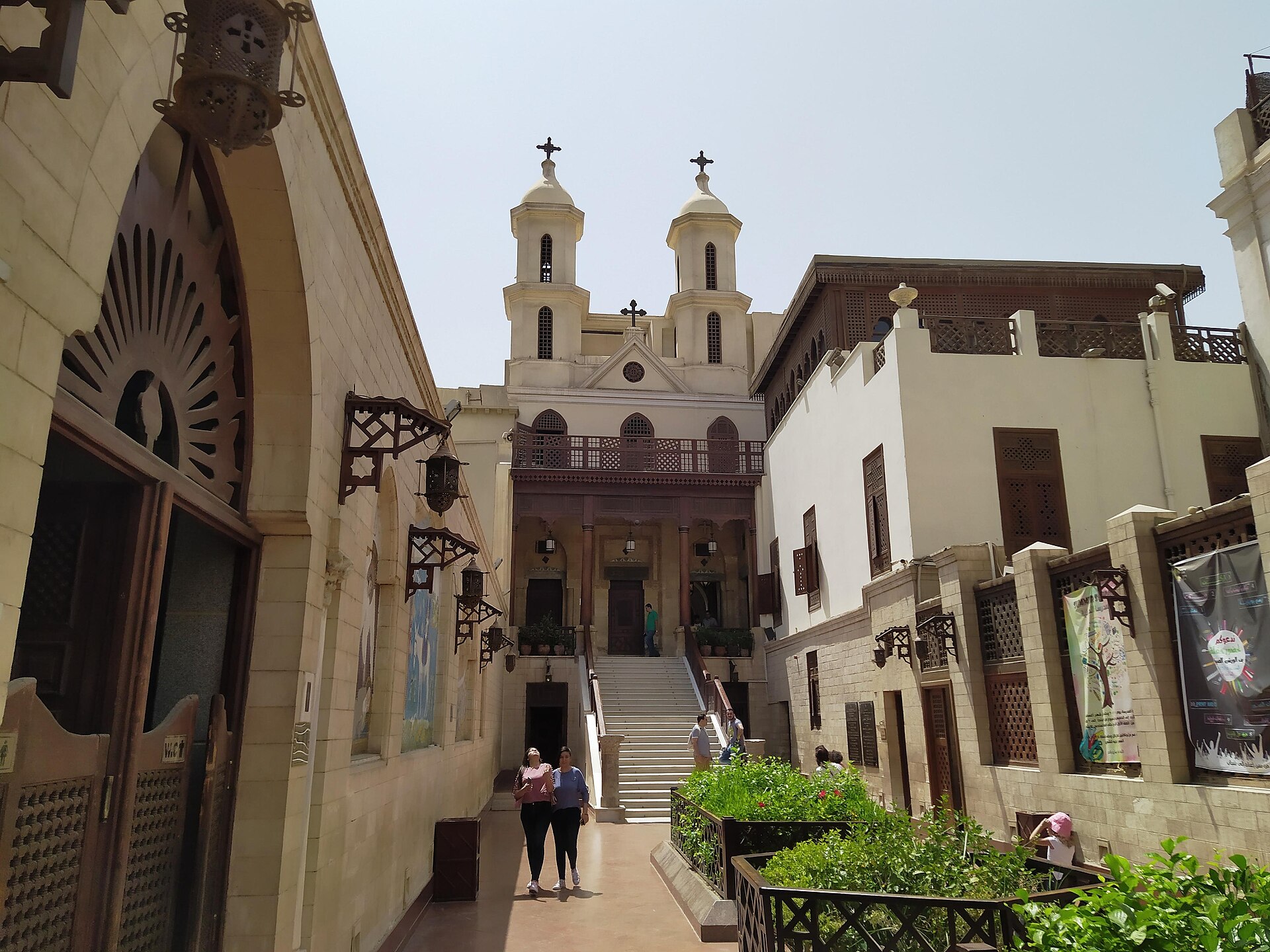
Most travellers come to Cairo for the pyramids, but the soul of the city lies in its old quarters. In Coptic Cairo, churches built over a Roman fortress tell the story of Egypt’s early Christians. A few kilometres north, Islamic Cairo has one of the richest collections of medieval architecture in the world, with mosques, madrasas, city gates and a bazaar that has been trading since the 14th century. UNESCO lists the whole area as Historic Cairo.
This guide covers the essential sights in both quarters, what each costs, how to dress, and a simple one-day route that links them together.
Old Cairo at a glance
Coptic Cairo sits inside the walls of the Babylon Fortress, a Roman stronghold built on the Nile around 2,000 years ago. Long before Cairo itself was founded, this was a thriving community, and Christianity reached Egypt here in the first century. You enter the quarter through narrow lanes below street level, and the noise of the modern city fades almost immediately.
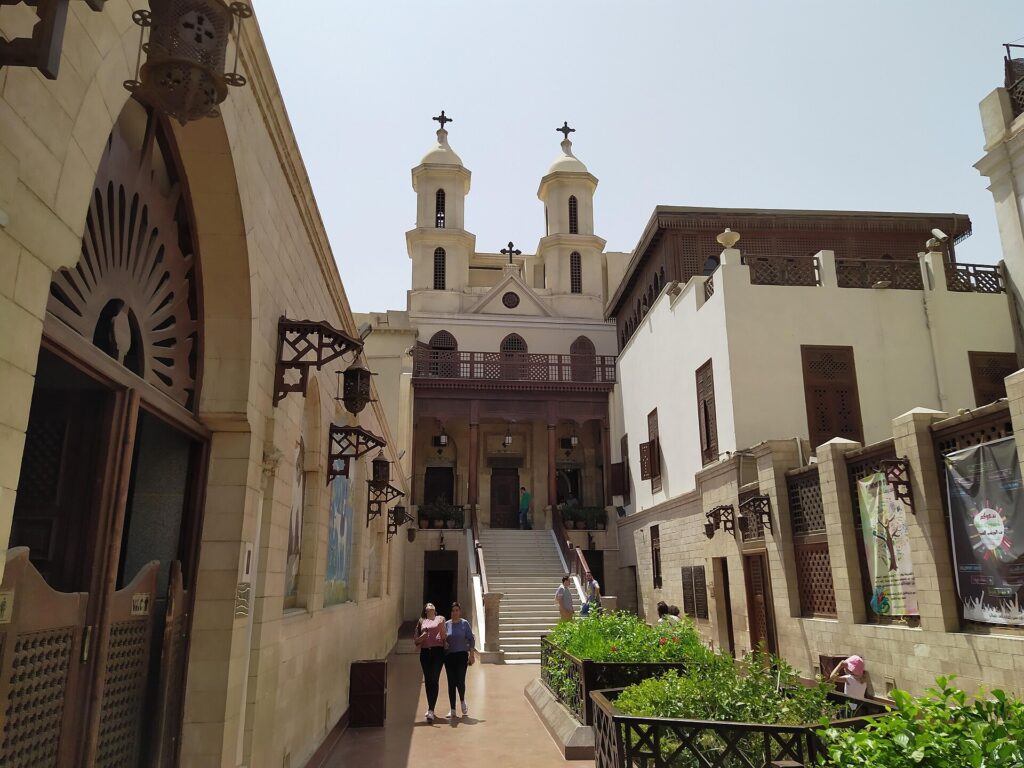
The Hanging Church, or al-Muallaqa, takes its name from the way it is built over the gatehouse of the Roman fortress, so its nave seems to hang above the old passage. A church has stood here since at least the 7th century. Climb the steps to see its carved wooden ceiling, shaped like Noah’s Ark, its marble pulpit on slender columns, and a beautiful collection of icons.
Dedicated to Saints Sergius and Bacchus, this is one of the oldest churches in Egypt. According to tradition, its crypt is one of the places where the Holy Family rested during their flight into Egypt. It remains an important stop on the Holy Family pilgrimage route.
Cairo’s best-known synagogue stands a short walk away. In the 19th century, scholars found here the Cairo Geniza, a storeroom of hundreds of thousands of manuscript fragments that revealed daily life in the medieval Mediterranean in extraordinary detail. The restored interior is calm and richly decorated.
Founded in 1910, the Coptic Museum holds the world’s largest collection of Coptic Christian art: carved wood and stone, textiles, icons, manuscripts and frescoes from monasteries across Egypt. The building itself, with its mashrabiya windows and garden, is a pleasure. Foreign adult ticket: EGP 280.
Just north of the Coptic quarter is the site of the first mosque built in Egypt, founded in 641 or 642 after the Arab conquest. It has been rebuilt many times, but its vast courtyard of columns is a peaceful place and a reminder of how many faiths have shared this corner of Cairo.
Founded by the Fatimids in 969, Cairo grew into one of the great cities of the medieval world. The streets of Islamic Cairo still hold hundreds of historic monuments, and unlike many old towns this is a living neighbourhood, full of workshops, markets and families.
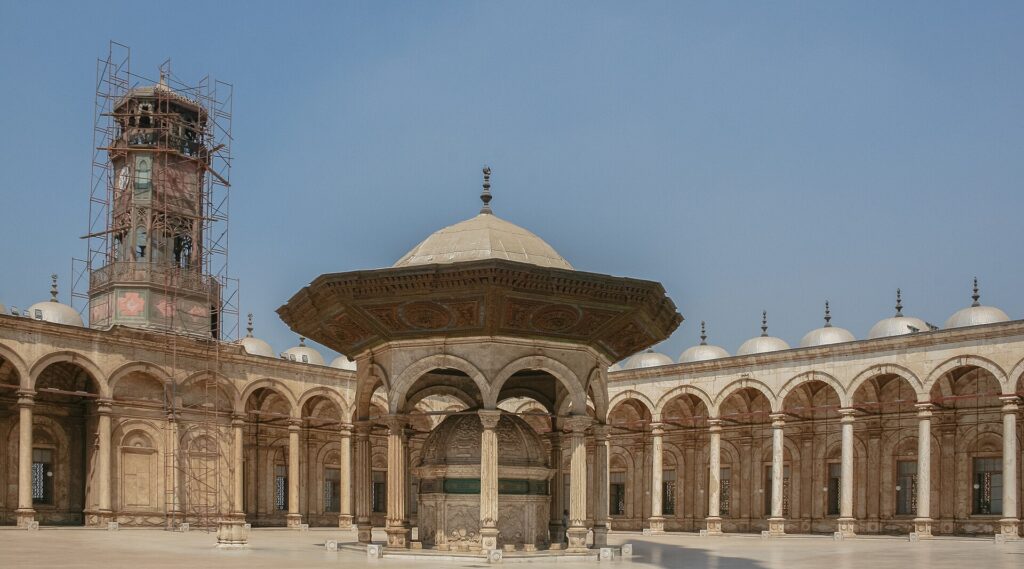
Saladin began building this hilltop fortress in 1176 to defend the city against the Crusaders, and it was the seat of Egypt’s rulers for almost 700 years. Its skyline is dominated by the Muhammad Ali Mosque, built in the Ottoman style between 1830 and 1848 and often called the Alabaster Mosque. From its terrace you get one of the best views over Cairo, and on a clear day you can see the pyramids. Foreign adult ticket: EGP 550.
At the foot of the Citadel stand two giants side by side. The Mosque-Madrasa of Sultan Hassan, built in the 14th century, is one of the masterpieces of Mamluk architecture, with a soaring entrance and a vast courtyard surrounded by four great halls. The neighbouring Al-Rifai Mosque was completed in the early 20th century and holds royal tombs, including that of King Farouk and the last Shah of Iran.
Completed in 879, Ibn Tulun is the oldest mosque in Cairo that survives in close to its original form. Its huge, quiet courtyard and its unusual spiral minaret make it one of the most atmospheric places in the city. Next door, the Gayer-Anderson Museum preserves two beautifully furnished Ottoman-era houses.
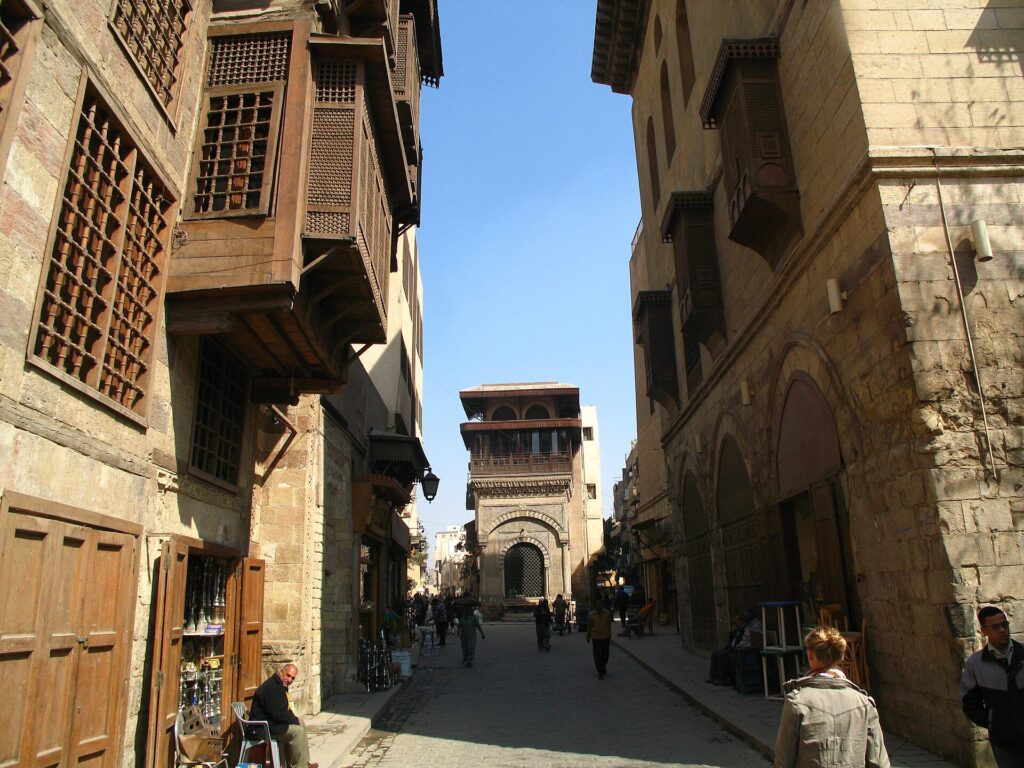
Al-Muizz li-Din Allah Street was the main avenue of Fatimid Cairo, and today it is a pedestrian-friendly stretch lined with Mamluk and Ottoman monuments. Highlights include the Qalawun complex with its hospital and mausoleum, the Madrasa of Barquq, the Sabil-Kuttab of Abdel Rahman Katkhuda, and Bayt al-Suhaymi, an elegant merchant’s house with courtyards and wooden screens. At the southern end, climb the minarets of Bab Zuweila, one of the old city gates, for a view over the rooftops.
Founded in 970, Al-Azhar is one of the oldest continuously operating centres of learning in the world. Visitors are welcome outside prayer times to see its marble courtyard and its mix of minarets from different eras.
Cairo’s great bazaar dates back to the 14th century. Its lanes are packed with lanterns, spices, perfume oils, silver, brass, textiles and souvenirs. Bargaining is expected, so start at about half the first price and stay friendly. When you need a break, sit down for mint tea or Turkish coffee at El Fishawy, a café that has been serving customers for more than two centuries.
| Site | Foreign adult |
|---|---|
| Citadel of Saladin (includes the Muhammad Ali Mosque) | EGP 550 |
| Coptic Museum | EGP 280 |
| Churches and the Ben Ezra Synagogue | Free |
| Some mosques and historic houses on Al-Muizz | Small fee |
Prices change from time to time, so check before you go. Students with a valid international student card usually pay about half.
Explore Old Cairo with a local guide
Private car, an Egyptologist guide and a route planned around prayer times and crowds.
Yes. Start in Coptic Cairo in the morning, move to the Citadel and Sultan Hassan at midday, and finish on Al-Muizz Street and in Khan el-Khalili in the late afternoon.
The churches and the Ben Ezra Synagogue are free. The Coptic Museum costs EGP 280 for foreign adults.
Loose clothing that covers shoulders and knees. Women should cover their hair with a scarf. You will remove your shoes before entering.
Yes, most shops open from late morning until late at night. Some close on Sunday or for Friday prayers.
Keep planning:
Tell us your dates and interests, and our Cairo team will build a private itinerary around them.