
The Complete Guide to Visiting the Pyramids of Giza
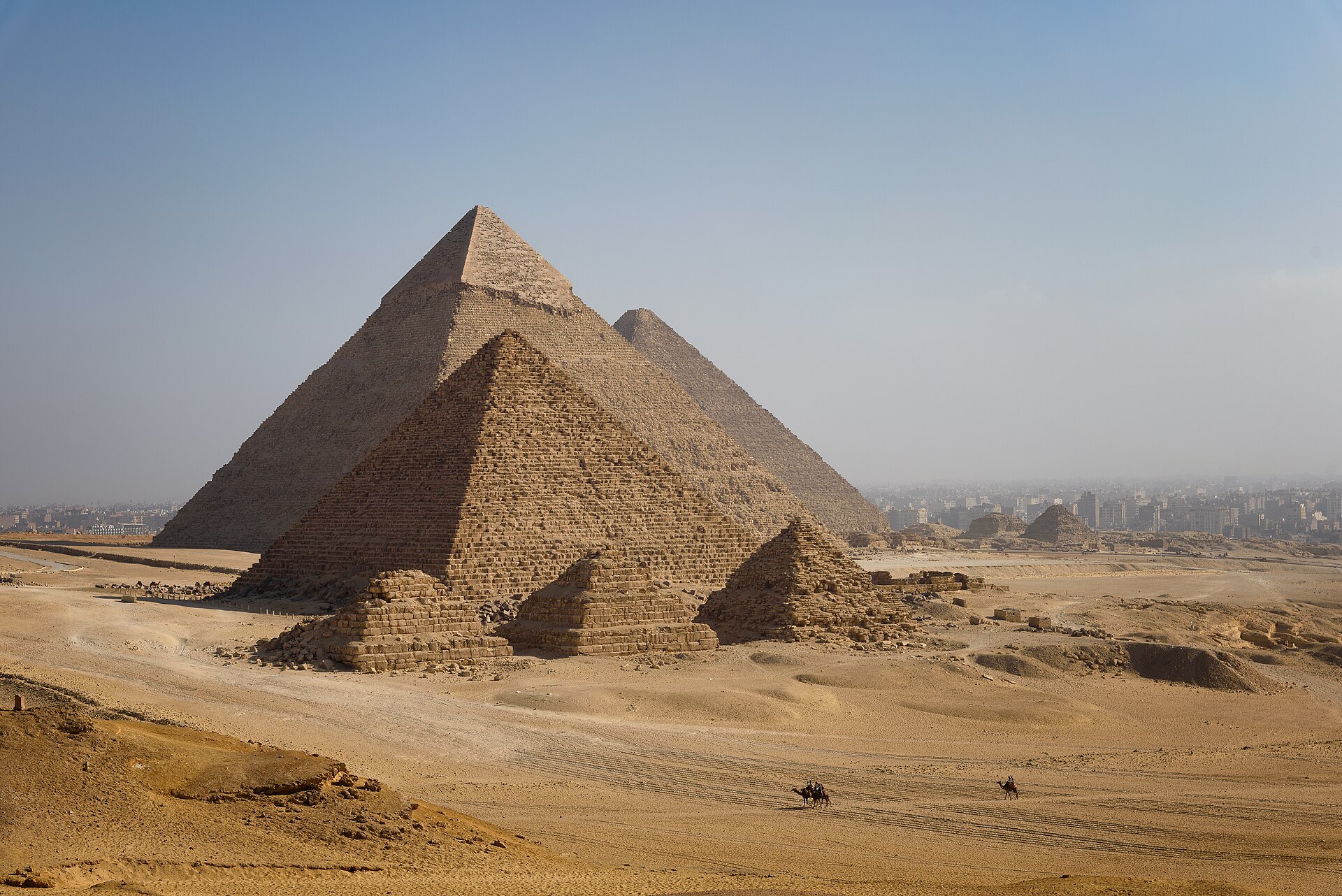
There are few moments in travel quite like your first sight of the Pyramids of Giza. One minute you are driving through the busy streets of a modern city, and the next, three vast stone monuments rise from the edge of the desert, exactly as they have for more than 4,500 years.
The Great Pyramid is the last surviving wonder of the Seven Wonders of the Ancient World, and the Giza Plateau is one of the most visited heritage sites on Earth. Yet many travellers arrive without a plan, spend too long in the wrong places and leave having missed some of the best views and experiences.
This complete guide covers everything you need to know: the history in brief, every monument on the plateau, the best viewpoints, whether to go inside a pyramid, camel rides, timing, tickets, what to wear and how to combine Giza with the rest of Cairo. By the end, you will know exactly how to plan a smooth, unforgettable visit.
Quick tip: arrive as early as you can. The first hours of the day bring softer light, cooler air and noticeably fewer crowds.
The Pyramids of Giza at a glance
The pyramids of Giza were built during Egypt’s Old Kingdom, in the 4th Dynasty, roughly between 2600 and 2500 BCE. They were royal tombs, designed to protect the body of the king and help him on his journey to the afterlife, where he would join the sun god and the stars.
The three main pyramids belong to three generations of one royal family:
The pyramids did not appear out of nowhere. They were the result of more than a century of experiments, beginning with the Step Pyramid of Djoser at Saqqara and continuing through the Bent and Red Pyramids at Dahshur. By the time Khufu’s architects began work at Giza, Egyptian builders had mastered the art of the smooth-sided, true pyramid.
Archaeologists have also uncovered the villages where the builders lived, complete with bakeries, breweries and tombs. They show that the pyramids were built by organised, paid and fed teams of skilled workers and seasonal labourers, not by slaves.
The Great Pyramid was originally about 146 metres tall, and for nearly 4,000 years it was the tallest human-made structure on the planet. It lost its smooth outer casing of white limestone over the centuries and today stands at around 138 metres.
It is made of an estimated 2.3 million stone blocks, some weighing several tons, and its sides are aligned with the cardinal points with astonishing accuracy. Standing at its base and looking up is the best way to appreciate its scale. Each of the lowest blocks comes up to roughly waist or chest height.
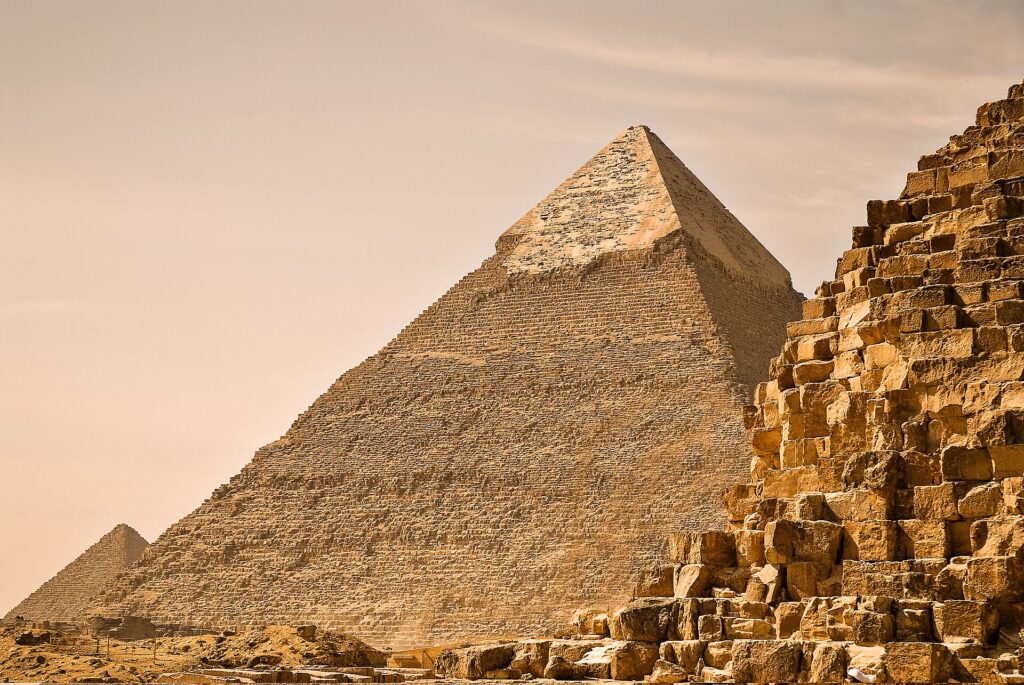
Khafre’s pyramid often looks like the tallest of the three in photographs. It is actually slightly smaller than the Great Pyramid, but it stands on higher ground. Look closely at its summit: it still keeps part of its original smooth limestone casing, giving you an idea of how all the pyramids once gleamed in the sun.
The third pyramid is much smaller, at around 65 metres, but no less beautiful. Its lower courses were once covered in red granite brought from Aswan, and some of these blocks can still be seen today. Beside it stand three small queens’ pyramids.
Carved directly from the limestone bedrock, the Great Sphinx is about 73 metres long and 20 metres high. It has the body of a lion and the head of a king, most likely Khafre. The Sphinx faces east, towards the rising sun, and was associated with the sun god in later periods.
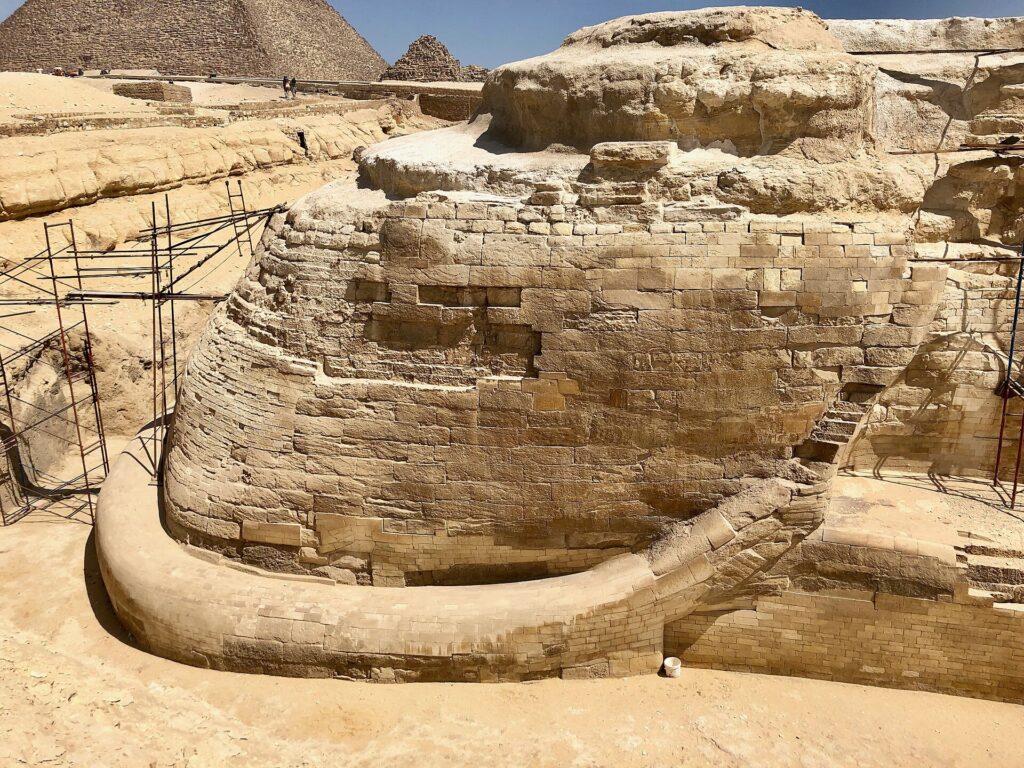
Next to the Sphinx is the Valley Temple of Khafre, built from massive granite blocks. It is one of the best-preserved Old Kingdom temples and is often overlooked by visitors who rush straight to the Sphinx viewing area. Take a few minutes to walk through it.
Around the main pyramids are smaller queens’ pyramids and vast cemeteries of mastaba tombs built for officials, priests and members of the royal family. Some of these tombs are decorated with reliefs of daily life and are occasionally open to visitors.
Many of the most famous photos of the pyramids are taken from just a few spots. Make sure you include them in your visit.
Photo tip: the light is softest early in the morning and late in the afternoon. Midday sun is harsh and flattens the stone.
It is possible to enter the Great Pyramid and some of the other pyramids with an additional ticket. Inside the Great Pyramid, a long, low passage leads up through the Grand Gallery, a remarkable sloping corridor with a corbelled roof, to the King’s Chamber with its granite sarcophagus.
It is an unforgettable experience for some visitors, but it is not for everyone:
If you want to see inside a pyramid without the crowds, ask your guide about the other pyramids on the plateau, which are sometimes quieter.
A camel ride across the desert with the pyramids behind you is a classic Egyptian experience. If you would like to ride, a few tips will make it more enjoyable:
Giza is busy, and you will meet vendors selling souvenirs, rides and photos. Most are simply trying to make a living, and a polite but firm “la, shukran“ (no, thank you) is usually all you need. Travelling with a guide makes a huge difference here, as they will keep things moving and let you focus on the monuments.
October to April offers the most comfortable temperatures. December and January are the busiest months. Summer is hot, but early morning visits are still very pleasant.
Arrive at opening time if you can. Tour coaches tend to arrive mid-morning, and the heat builds quickly in the open desert. Late afternoon can also be lovely, with warm light on the stone.
Allow three to four hours to see the main pyramids, the panoramic viewpoint, the Sphinx and the Valley Temple without rushing. Add time if you plan to go inside a pyramid or take a camel ride.
These are the current prices for foreign visitors, in Egyptian pounds. Each ticket is bought separately at the plateau gates or on the official Egyptian ticketing website.
| Ticket | Foreign adult |
|---|---|
| Giza Plateau general entry (includes the Sphinx area) | EGP 700 |
| Inside the Great Pyramid of Khufu | EGP 1,500 |
| Inside the Pyramid of Menkaure | EGP 280 |
| Grand Egyptian Museum (nearby) | EGP 1,830 |
Giza is on the western edge of greater Cairo. Depending on traffic, the drive from central Cairo can take anywhere from 30 minutes to over an hour. A private car with a driver is the easiest and most comfortable option, especially if you plan to combine the pyramids with other sites on the same day.
The pyramids pair perfectly with several other experiences:
You can visit the pyramids independently, but a good Egyptologist guide transforms the experience. They will explain how the pyramids were built and why, point out details you would never notice, plan the route to avoid crowds and handle tickets and vendors, so you can simply enjoy one of the greatest sights on Earth.
Since 1987, Empire Travel has welcomed travellers to the Pyramids of Giza. Our tours combine comfortable private transport, expert Egyptologist guides and carefully planned timing, so you see the plateau at its best.
Visit the pyramids with a private guide
Hotel pick-up, tickets handled and an Egyptologist who plans the route around the crowds.
A foreign adult ticket for the Giza Plateau costs EGP 700. Going inside the Great Pyramid costs an extra EGP 1,500, and the Pyramid of Menkaure EGP 280.
It is an unforgettable experience if you are comfortable in narrow, steep and warm passages. There is no decoration inside, so the value is the atmosphere and the Grand Gallery rather than art.
Three to four hours covers the three pyramids, the panoramic viewpoint, the Sphinx and the Valley Temple without rushing.
Yes. They are about two kilometres apart. Do the pyramids in the morning and the museum in the afternoon.
No. Climbing the pyramids is forbidden for safety and conservation reasons.
Keep planning:
Tell us your dates and interests, and our Cairo team will build a private itinerary around them.