
Saqqara and Memphis: Exploring Egypt Beyond Giza
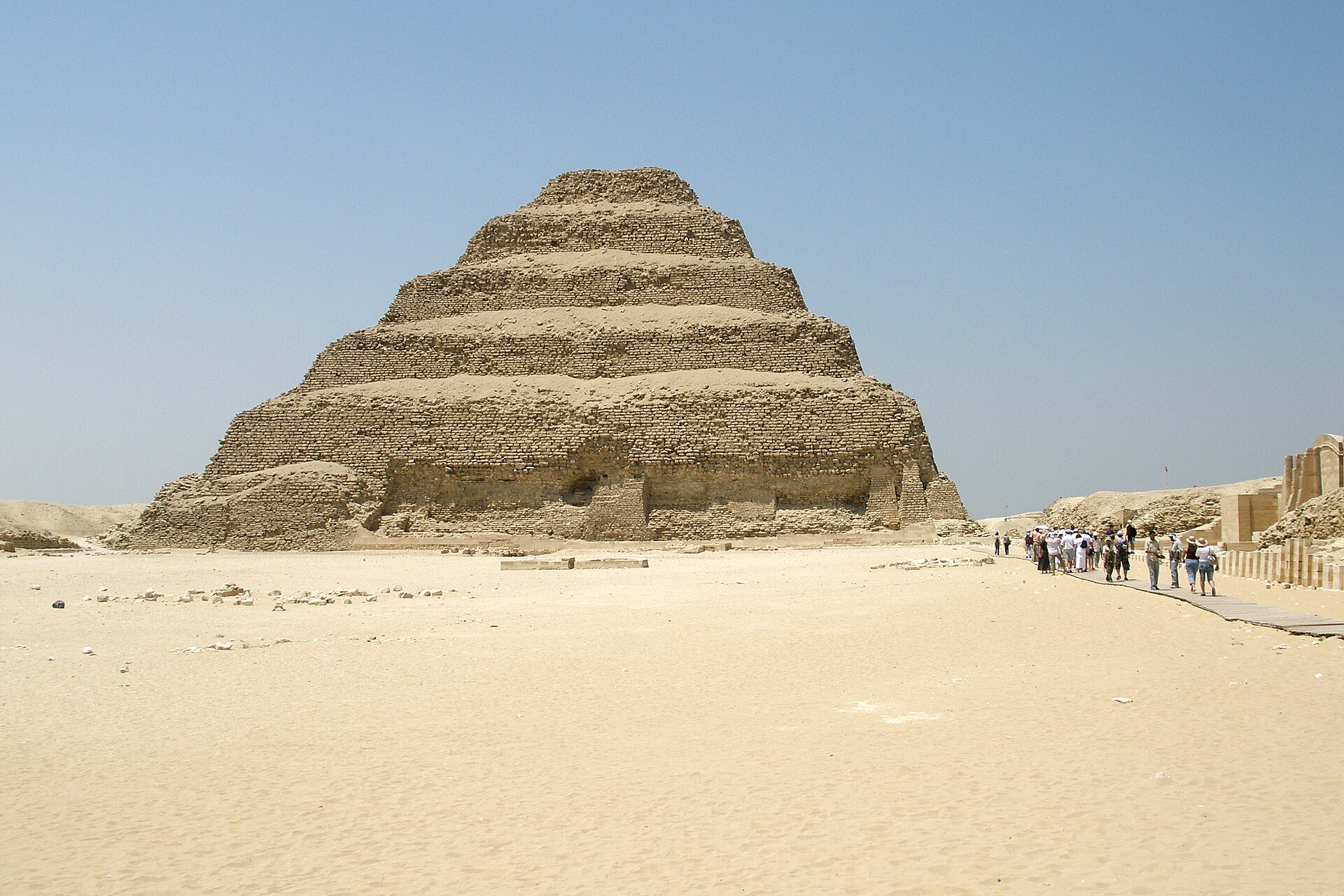
Most visitors to Cairo see the Pyramids of Giza and stop there. They miss the place where the pyramid age actually began. About 30 kilometres south of the city, the desert at Saqqara holds the Step Pyramid of Djoser, the oldest large stone building in the world, along with painted tombs, the earliest religious texts ever carved inside a pyramid, and the vast underground galleries of the sacred Apis bulls. Nearby, among palm groves, lie the remains of Memphis, the first capital of united Egypt.
This guide explains what to see at Saqqara and Memphis, what it costs, how long to allow, and how to combine both with Giza in one day.
Saqqara and Memphis at a glance
Saqqara was the main burial ground of Memphis for more than 3,000 years, so it holds monuments from almost every period of ancient Egypt. Kings, queens, officials and even sacred animals were buried here, and new tombs are still being discovered.
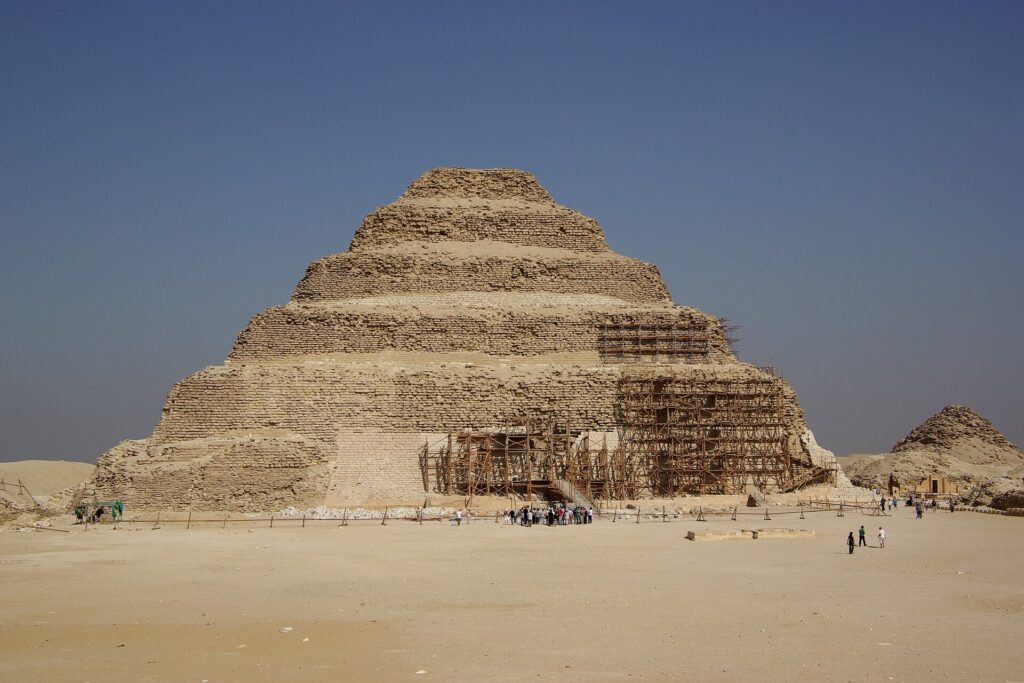
Built around 2670 BC for King Djoser by his architect Imhotep, the Step Pyramid began as a flat mastaba tomb and grew into six stacked steps about 60 metres high. It was the first time anyone had built on this scale in stone, and every pyramid that followed, including the Great Pyramid at Giza, owes something to it. Walk through the colonnaded entrance hall and into the great courtyard to see how the whole funerary complex was laid out.
From the outside, the Pyramid of Unas looks like a pile of rubble. Inside, its burial chamber walls are covered with the Pyramid Texts, columns of hieroglyphs carved around 2350 BC to help the king reach the afterlife. They are the oldest known religious writings of their kind, and the blue-painted ceiling with its stars is unforgettable when it is open.
For many visitors, the private tombs are the real highlight. The mastabas of officials such as Ti, Mereruka and Ptahhotep are decorated with some of the finest reliefs in Egypt: farmers harvesting grain, boats on the Nile, butchers, dancers, hippos and fish, all carved with extraordinary detail. They show daily life 4,300 years ago more vividly than any museum.
Beneath the sand runs a long series of tunnels where the sacred Apis bulls of Memphis were buried. Side chambers hold more than twenty enormous granite and basalt sarcophagi, many weighing over 60 tons. Walking through the dim corridors is one of the most atmospheric experiences in Egypt.
At the entrance to the site, this small museum displays finds from Saqqara and honours Imhotep, the architect who later became revered as a god of wisdom and medicine. It is a good first stop to understand what you are about to see.
According to tradition, Memphis was founded around 3100 BC by Menes, the king who united Upper and Lower Egypt. For much of ancient history it was one of the largest cities in the world. Very little of it survives above ground today, but the open-air museum at Mit Rahina gathers some remarkable pieces in a quiet garden.
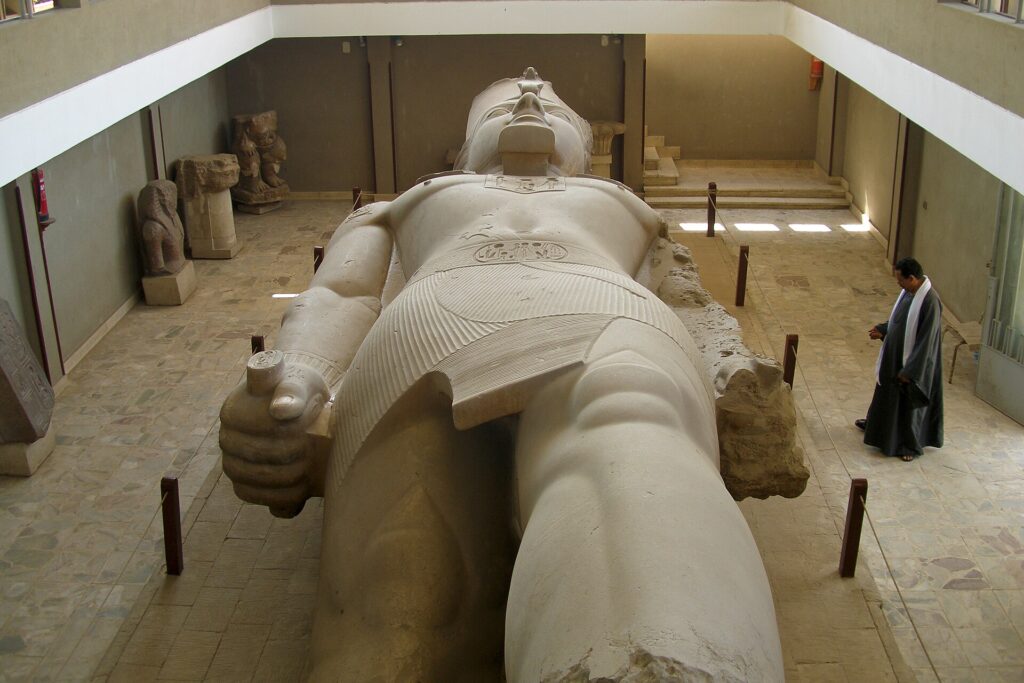
The star is a colossal limestone statue of Ramesses II, about 10 metres long, which lies on its back inside a dedicated building so you can look down on its carved face and royal names from a gallery. Outside you will find an alabaster sphinx, statues of Ramesses II and other kings, and fragments of the temples that once stood here.
| Site | Foreign adult |
|---|---|
| Saqqara general ticket | EGP 600 |
| Special tombs (some days) | Extra ticket |
| Memphis open-air museum | Separate ticket |
| Giza Plateau (for comparison) | EGP 700 |
Which tombs are open changes from time to time as they rotate for conservation. Prices also change, so check before you go or let your tour operator handle tickets. Students with a valid international student card usually pay about half.
This is exactly the route of our Giza Pyramids, Sphinx, Memphis and Saqqara full-day tour, with a private car and an Egyptologist guide.
See Saqqara with an Egyptologist
Private car, tickets arranged and a guide who knows which tombs are open.
The general Saqqara ticket costs EGP 600 for foreign adults. Some special tombs and the Serapeum may need an extra ticket on certain days.
About 30 kilometres south of central Cairo, or 30 to 45 minutes from Giza by car depending on traffic.
Yes. Start at Giza early, stop at Memphis around late morning and spend the afternoon at Saqqara.
The interior of the Step Pyramid reopened after restoration in 2020. Access depends on the day and may need an extra ticket, so ask your guide.
Yes. Saqqara shows how pyramids began, and its painted tombs are among the finest in Egypt.
Keep planning:
Tell us your dates and interests, and our Cairo team will build a private itinerary around them.