
Egypt Itinerary: The Best 7, 10 and 14-Day Routes
The best Egypt itinerary for most first-time travellers is Cairo for two or three days, followed by Aswan and Luxor, ideally linked by a Nile cruise. With 7 days you can see the essentials; with 10 days you can add Abu Simbel and a few days on the Red Sea or in Alexandria; with 14 days you can slow down and see far more of Luxor.
This guide gives you three tried-and-tested day-by-day routes, explains whether to cruise or fly between cities, and shows how to set a pace that leaves you enjoying the temples rather than just ticking them off.
Egypt itinerary at a glance
Almost every good Egypt route is built from the same blocks: Cairo and Giza in the north, then the Nile Valley in the south, where Aswan and Luxor sit roughly 200 km apart along the river. The extras (Abu Simbel, the Red Sea coast, Alexandria) are added depending on how many days you have.
A few principles make the difference between a rewarding trip and an exhausting one:
Season matters too. Southern Egypt is very hot from roughly May to September, so summer itineraries need earlier starts and longer midday breaks. October to April is the most comfortable time for touring.

Between Aswan and Luxor you have two good options, and the choice shapes the whole middle of your trip.
A cruise between Aswan and Luxor usually lasts three or four nights, stopping at the riverside temples of Kom Ombo and Edfu on the way. You unpack once, your meals are taken care of, and the slow days on deck are often what people remember most. Cruises typically sail in both directions on fixed weekly schedules, so your flights from Cairo need to fit the boat’s departure day.
Our 7-day Cairo and Nile cruise tour shows how a cruise fits into a week, with domestic flights already arranged.
Staying in hotels in Luxor and Aswan, and travelling between them by road, gives you full control over timings. It suits travellers who dislike fixed schedules, want a particular hotel, or are travelling in summer when early starts and air-conditioned rooms matter more. The road between the two cities takes around three to four hours, and Kom Ombo and Edfu can be visited on the way.
A sleeper train links Cairo with Luxor and Aswan. It is atmospheric, but it takes most of a night, so we suggest it only for travellers who want the journey itself.
Local tip: Ask which direction your cruise sails. Sailing from Aswan to Luxor is usually shorter than the reverse, which is useful on a 7-day trip. Sailing from Luxor to Aswan gives you an extra night on board.
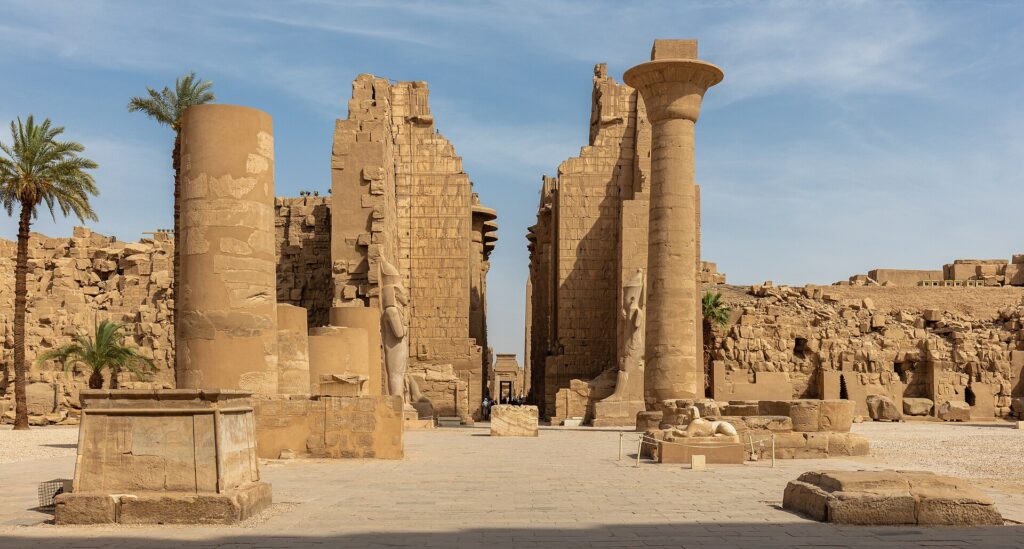
A 7 day Egypt itinerary covers the classic highlights at a steady pace: the Pyramids, the Grand Egyptian Museum, a three-night cruise and the tombs of Luxor’s West Bank.
For days 1 to 3, our Cairo itinerary for 1, 2 or 3 days covers the city in detail, including how to order the sites and where to eat.
The closest ready-made route is our 7-day Cairo and Nile cruise tour with domestic flights, which we can extend by a night or two. If you would rather skip the cruise, the same week works with two nights in a Luxor hotel and one in Aswan.
A 10 day Egypt itinerary is the length we recommend most often. It adds Abu Simbel and a few days to relax at the end, either on the Red Sea or in Alexandria.
The nearest Empire package is our 10-day private Egypt tour with Cairo, a Nile cruise and Hurghada.
If beaches are not your priority, fly from Luxor back to Cairo on day 8, spend day 9 in Alexandria (the Catacombs of Kom el-Shoqafa, Pompey’s Pillar, the Citadel of Qaitbay and the Bibliotheca) and fly home from Cairo on day 10. Our guide to an Alexandria day trip from Cairo explains how the day works.
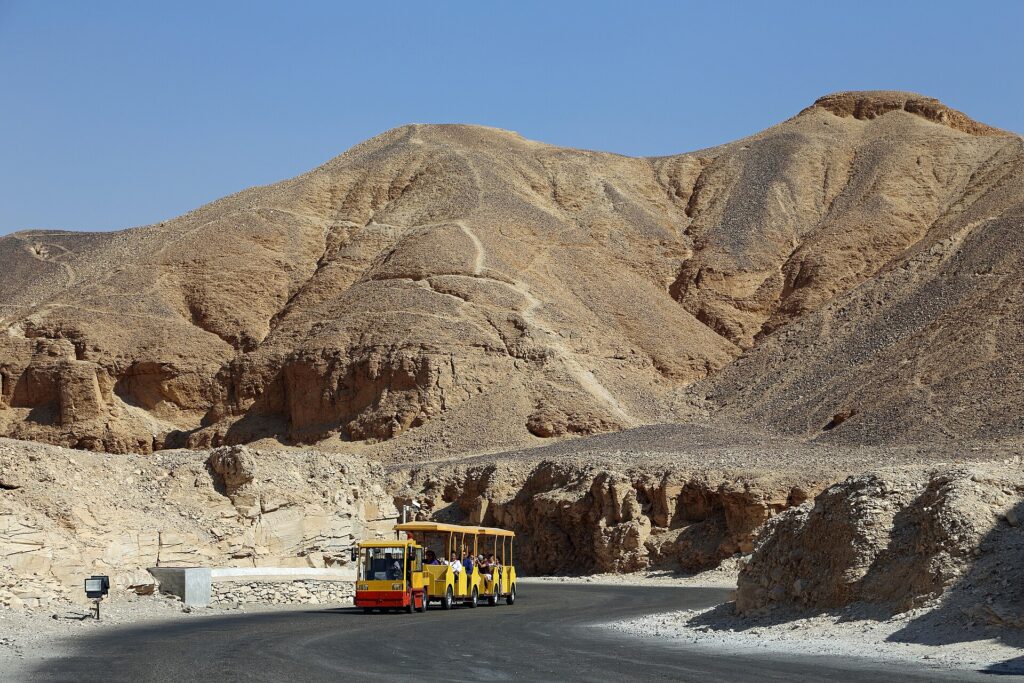
A 2 week Egypt itinerary lets you see everything on the 10-day route at a gentler pace, with extra time in Luxor, a proper Red Sea break and Alexandria before you fly home.
The extra Luxor days are where this route really pays off. Our Luxor destination guide lists the main sites on both banks.
The closest package to build from is our 8-day private Cairo, Luxor and Aswan Nile cruise tour, extended with extra Luxor nights, the Red Sea and Alexandria.
Local tip: On a two-week trip, put the beach in the middle or at the end, not the beginning. Most travellers find the temples more enjoyable while they are fresh, and the Red Sea is a better reward than a starting point.
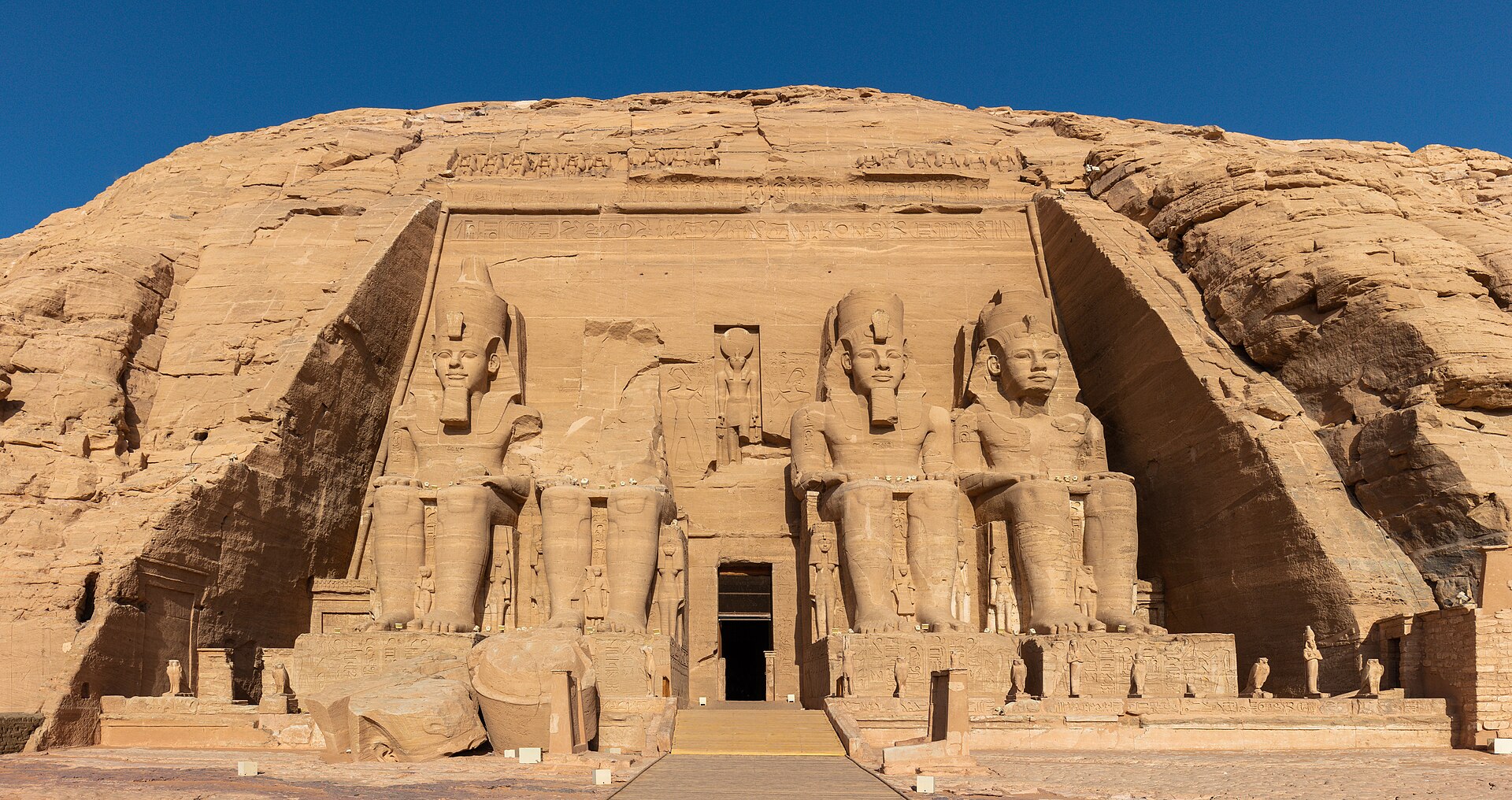
For most people, yes. The two rock-cut temples of Ramses II and his queen Nefertari are among the most impressive monuments in Egypt, and they look nothing like the temples of the Nile Valley. Read more on our Abu Simbel destination page.
The catch is distance. Abu Simbel lies roughly 280 km south of Aswan, close to the Sudanese border. You have two ways to get there:
If you have only 7 days and are on a cruise, Abu Simbel is possible on the cruise’s free morning in Aswan, but it makes for a very long day. On a 10 or 14-day trip, give it its own day.
| Route | Best for | What you see | Pace | Closest Empire package |
|---|---|---|---|---|
| 7 days | First-timers short on time | Cairo, Giza, Aswan, Kom Ombo, Edfu, Luxor | Busy but manageable | 7-day Cairo and Nile cruise |
| 10 days | Most first-time visitors | The 7-day route plus Abu Simbel and Hurghada or Alexandria | Balanced, with rest days | 10-day Cairo, Nile cruise and Hurghada |
| 14 days | History lovers and slower travellers | The 10-day route plus extra Luxor, Dendera and Abydos, the Red Sea and Alexandria | Relaxed | 8-day Cairo, Luxor and Aswan, extended |
Turn this itinerary into your trip
Tell us your dates and pace. Our Cairo team, working since 1987, plans private Egypt tours with Egyptologist guides, Nile cruises and domestic flights.
Ten days is ideal for a first visit: three days in Cairo, a Nile cruise between Aswan and Luxor, Abu Simbel and a short break on the Red Sea or in Alexandria. Seven days covers the essentials.
Yes, for the highlights: Cairo and Giza, Aswan, a three-night Nile cruise and Luxor. You will need domestic flights and some early starts.
A cruise is relaxing and includes Kom Ombo and Edfu on the way. Hotels give you more control over timing and suit summer travel. Both work well.
For most travellers, yes. The temples of Ramesses II and Nefertari are among the greatest monuments in Egypt. Allow a full morning by road, or fly.
October to April is the most comfortable time for sightseeing. Summer is very hot in Luxor and Aswan, so plan early starts.
Keep planning:
Seven days is enough for Cairo, Aswan and Luxor. Ten days is ideal for a first trip, as it adds Abu Simbel and some time to relax. With 14 days you can see the main sites without rushing.
A cruise is more relaxing and includes the temples of Kom Ombo and Edfu along the way. Hotels and road transfers give you more flexibility. Both work well; it depends on your travel style.
Most travellers start in Cairo because international flights arrive there and the museums give useful context. Some flights land in Luxor or Hurghada, and the route can be reversed if that suits you.
Only by dropping something else. A week is best spent on Cairo and the Nile Valley. If the beach matters, aim for 10 days.
Yes, but it is a long half-day. The drive takes around three and a half hours each way, so most visits leave before dawn. Flights are a quicker alternative.
Tell us your dates and interests, and our Cairo team will build a private itinerary around them.