
Khan el-Khalili: A Shopper’s Guide to Cairo’s Great Bazaar
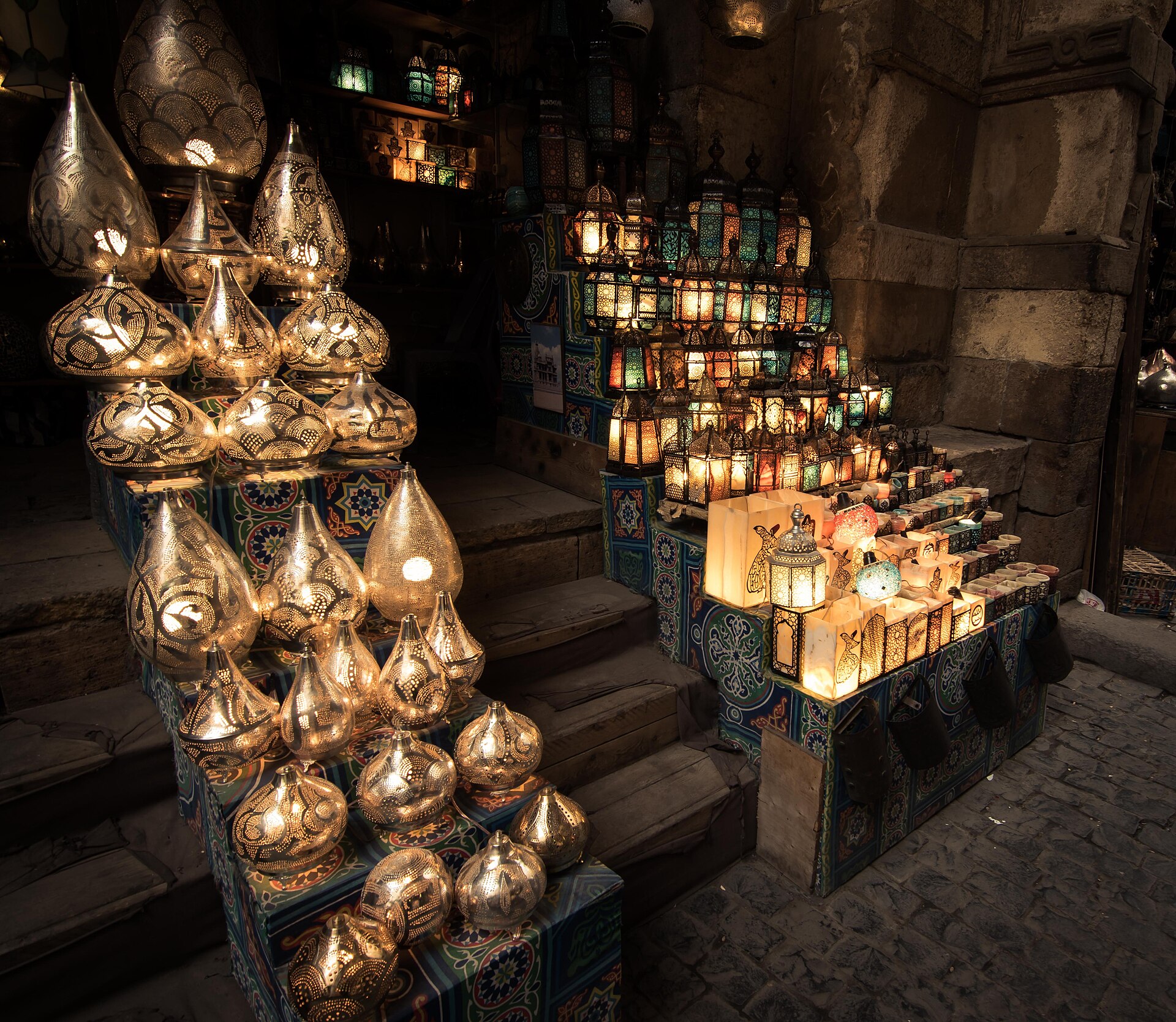
Khan el-Khalili is Cairo’s great bazaar, a maze of covered lanes, workshops and tiny shops that has been trading since the 14th century. Lanterns glow above the alleys, spice sellers call out to passers-by, and craftsmen hammer brass in doorways just as they have for generations. For many visitors it is the most memorable evening of a trip to Cairo.
It can also feel overwhelming. This guide explains where the bazaar is, what is worth buying, how to bargain with confidence, where to stop for tea, and how to avoid paying too much.
Khan el-Khalili at a glance
The bazaar sits in the heart of historic Cairo, in the area UNESCO lists as Historic Cairo. It was founded in 1382 by the Mamluk emir Jaharkas al-Khalili on the site of an old Fatimid palace, and grew into the commercial centre of the medieval city. Today the main entrance is from Al-Hussein Square, next to the Al-Hussein Mosque, one of the most important shrines in Cairo.
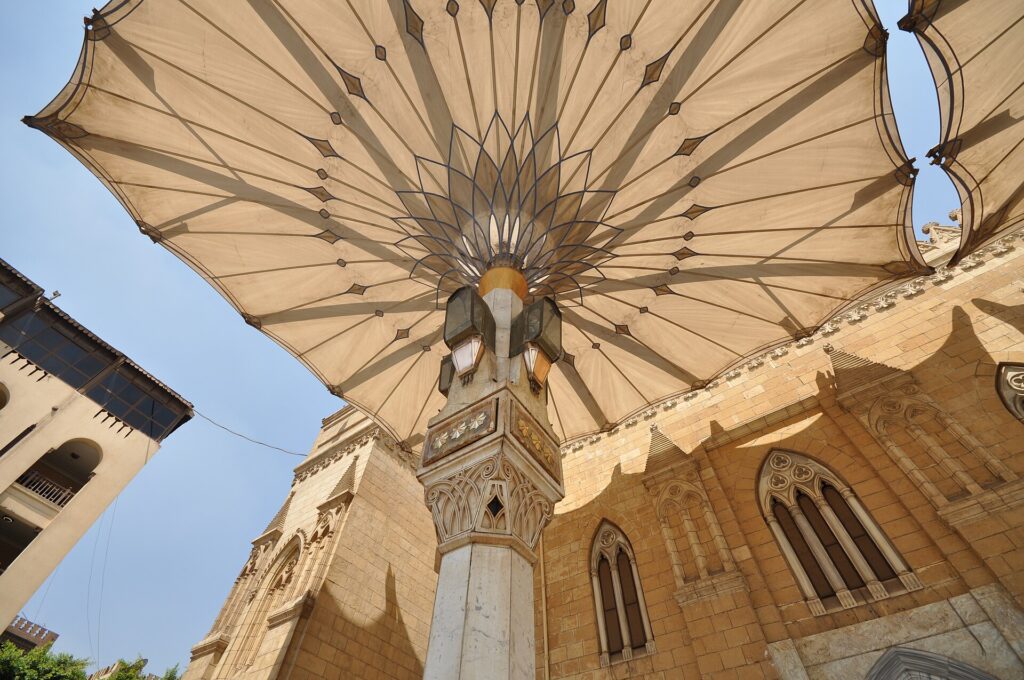
From the bazaar you can walk straight onto Al-Muizz Street, lined with medieval mosques and madrasas, or cross the road to Al-Azhar Mosque. Our guide to Coptic and Islamic Cairo covers these monuments, and makes it easy to combine sightseeing and shopping in one afternoon.
Pierced brass and coloured-glass lanterns are the classic Khan el-Khalili souvenir. Many are made in workshops nearby. Ask whether a lantern can be flat-packed, and check that the glass panels are firmly fixed.
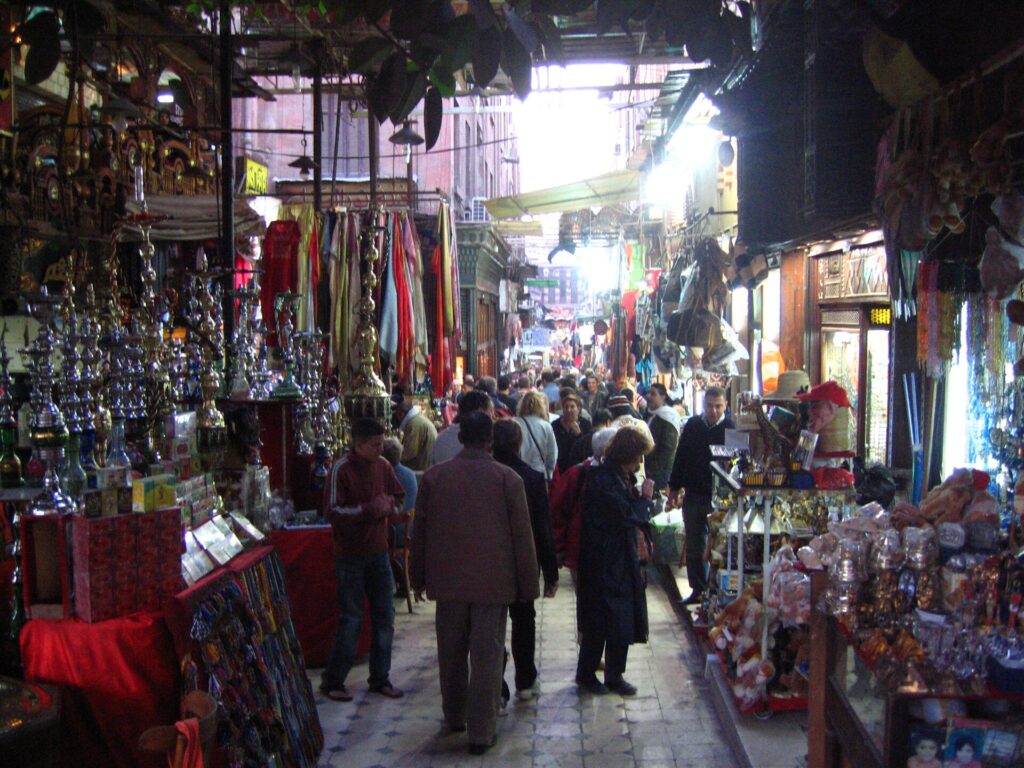
Look for cumin, coriander, saffron-style safflower, dried hibiscus (karkadeh) for the famous red tea, and mixed spice blends. Buy from stalls with high turnover and sealed bags if you are taking them home.
Perfume shops will invite you to smell dozens of essential oils and choose a hand-blown glass bottle. The bottles are beautiful and light to carry. Be cautious with claims that an oil is pure or rare.
Egyptian cotton is world famous, but not everything sold as cotton is. Feel the fabric and check labels. Scarves and traditional galabeya robes make good gifts.
Jewellers can make a silver or gold cartouche with your name in hieroglyphs, often within a day. Gold is usually priced by weight plus a charge for workmanship, so ask for both figures.
Wooden boxes and boards inlaid with mother-of-pearl are a Cairo speciality. Check the inlay closely: real shell has a shifting sheen, while plastic looks flat. Alabaster vases and figures are heavy, so think about your luggage.
Real papyrus is strong and slightly fibrous. Cheap versions are often made from banana leaf and crack when rolled. If papyrus matters to you, buy from a specialist shop rather than a street seller.
Bargaining is expected in most shops, and done with good humour it is part of the fun.
Only start bargaining for something you actually want. Agreeing a price and then walking away is considered rude.
El Fishawy, deep in the bazaar, is one of Cairo’s most famous cafés and has been serving customers for more than two centuries. Sit among the mirrors and brass, order mint tea, Turkish coffee or a fresh juice, and watch the bazaar go by. Around Al-Hussein Square you will also find simple restaurants serving grilled meats, koshari and Egyptian sweets.
Explore Islamic Cairo and the bazaar with a guide
A private Egyptologist guide for the Citadel, the great mosques and Khan el-Khalili.
Yes, most shops open every day from late morning until late at night. Some close on Sundays, and many pause for Friday prayers.
Start at around half of the first price and meet somewhere in the middle. Compare a few shops first so you know a fair price.
Yes, it is busy and well policed. Watch your belongings in crowded lanes, as you would in any big market.
Many larger shops do, but carry cash in small notes for stalls, cafés and tips.
Late afternoon into the evening, when it is cooler and the lanterns are lit.
Keep planning:
Tell us your dates and interests, and our Cairo team will build a private itinerary around them.