
Tutankhamun: The Boy King, His Tomb and His Treasures
No name from ancient Egypt is better known than Tutankhamun, yet he was a minor king who died young after a short reign. His fame comes from one extraordinary fact: when Howard Carter opened his tomb in 1922, it was almost intact, packed with more than 5,000 objects that had lain in the dark for over 3,000 years.
This guide tells the story of the boy king, his death and the discovery, explains the greatest treasures, and shows exactly where you can see them in Egypt today, from the Grand Egyptian Museum in Giza to his tomb in the Valley of the Kings.
Tutankhamun at a glance
Tutankhamun was born around 1341 BC with the name Tutankhaten, most likely a son of the pharaoh Akhenaten, who had turned Egypt upside down by worshipping a single god, the Aten, and building a new capital at Amarna. DNA studies published in 2010 support Akhenaten as his father.
He came to the throne as a child of about nine. Guided by powerful advisers, he restored the old gods, brought the court back from Amarna, and changed his name to Tutankhamun, “living image of Amun”. He married Ankhesenamun, a daughter of Akhenaten and Nefertiti. About ten years later, he was dead.
Nobody knows for certain. Scans of his mummy show a broken leg that may not have healed before death, and DNA tests found evidence of malaria and a bone condition in one foot, which may explain the walking sticks buried with him. Theories range from a chariot accident to infection. The old idea that he was murdered by a blow to the head is now largely rejected.
What is clear is that his death was unexpected. His tomb is small for a king, and some of his burial goods seem to have been made for someone else, suggesting a hurried funeral.
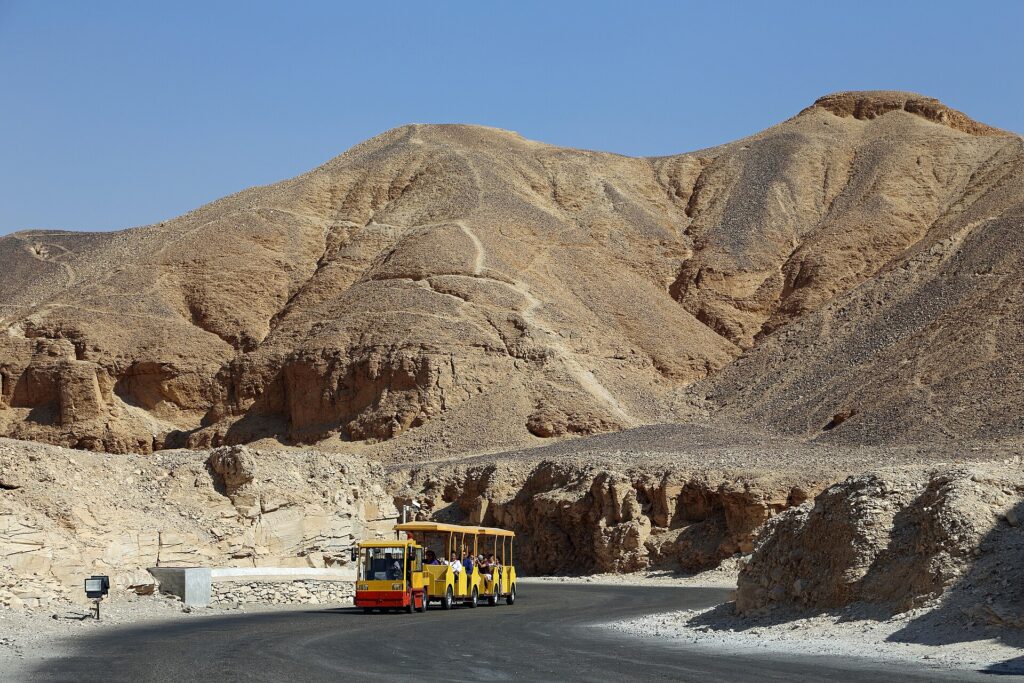
By the early 20th century, most archaeologists believed the Valley of the Kings had nothing left to give. Howard Carter disagreed, and with funding from Lord Carnarvon he searched for years. On 4 November 1922 his workers found a step cut into the rock. On 26 November, Carter made a small hole in a sealed doorway and held up a candle. Asked if he could see anything, he is said to have replied, “Yes, wonderful things.”
It took Carter and his team about ten years to record, conserve and remove everything. The antechamber was crammed with couches, chariots and boxes. The burial chamber held four gilded shrines nested inside each other, a stone sarcophagus, and three coffins, the innermost made of solid gold. Inside lay the mummy, wearing the famous mask.
When Lord Carnarvon died in Cairo a few months after the opening, newspapers spread the story of a “curse of the pharaohs”. In reality he died from an infected mosquito bite, and most of the team lived long lives.
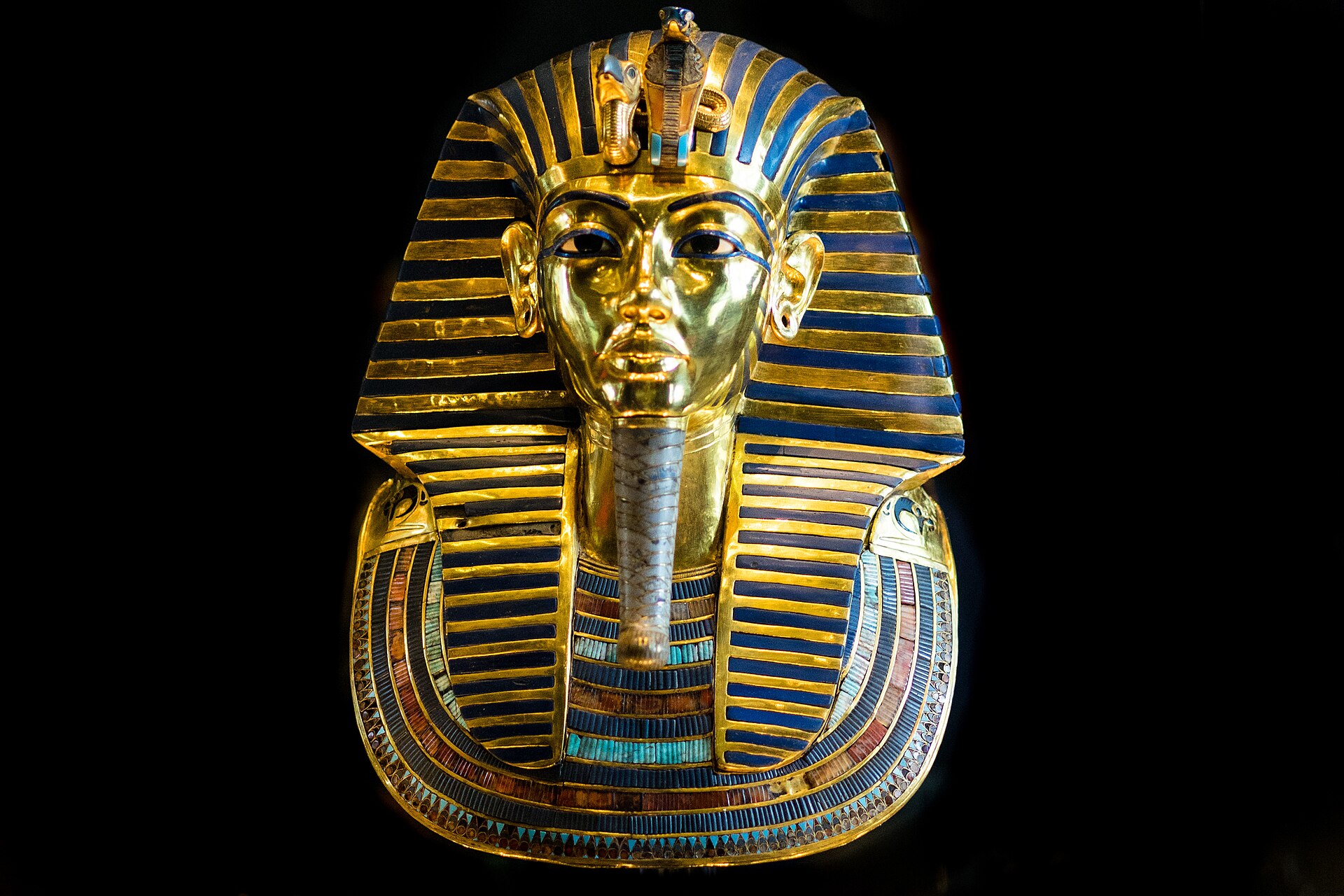
Made of about 10 kilograms of gold inlaid with lapis lazuli, quartz and coloured glass, the burial mask is the most famous work of art from ancient Egypt. It shows the young king with the vulture and cobra on his brow and a braided divine beard.
Three coffins fitted inside one another. The innermost is solid gold and weighs about 110 kilograms, an astonishing amount of metal for one burial.
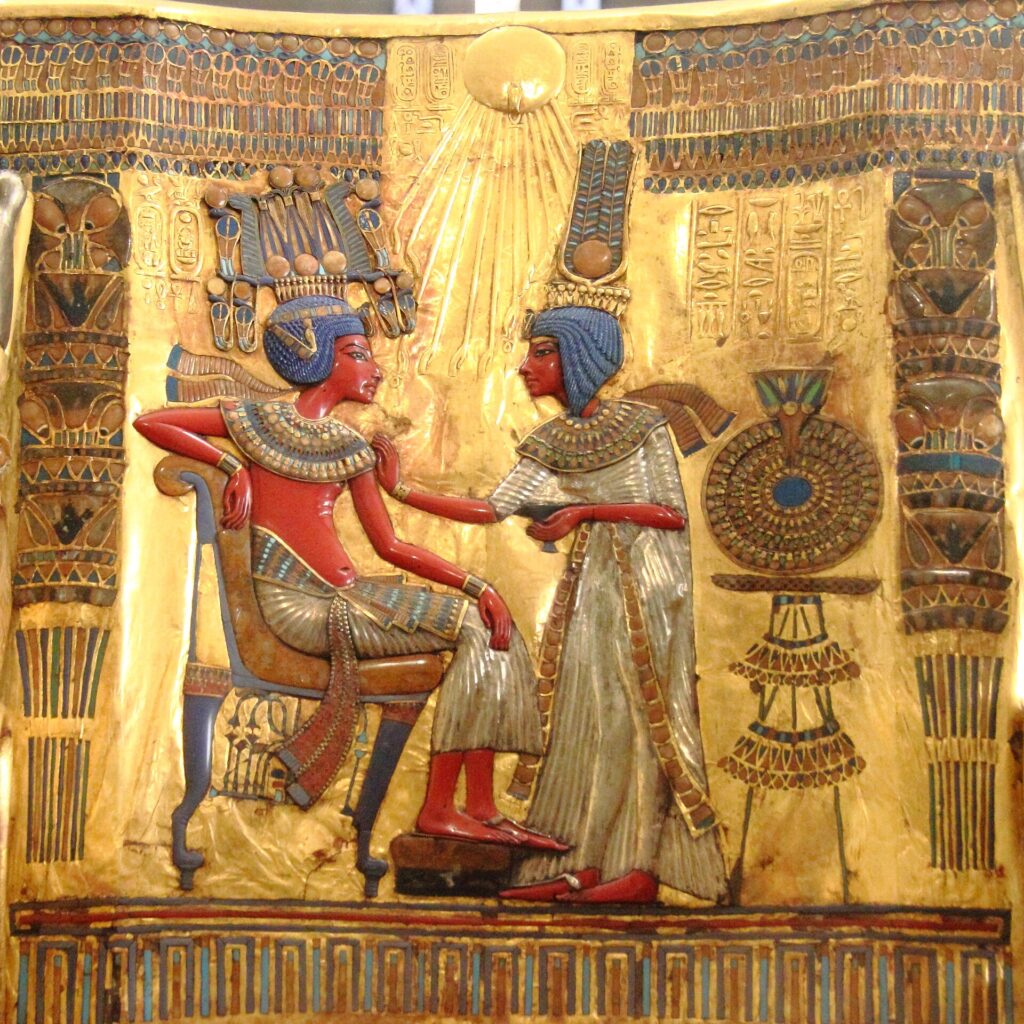
The back panel of his throne shows Ankhesenamun gently touching her husband’s shoulder under the rays of the sun, a tender, intimate scene in the relaxed Amarna style.
The tomb held six chariots, bows and arrows, a dagger with a blade made of meteoric iron, board games, clothing, sandals, jewellery and even food. These everyday objects bring the young king to life as much as the gold.
| Place | What you see | Foreign adult ticket |
|---|---|---|
| Grand Egyptian Museum, Giza | The complete tomb collection, including the gold mask, coffins, shrines, throne and chariots | EGP 1,830 |
| Tomb KV62, Valley of the Kings, Luxor | The painted burial chamber, the stone sarcophagus and the king’s mummy | Separate ticket |
Since the GEM opened fully in November 2025, every object from the tomb is displayed together in the dedicated Tutankhamun Galleries, in the order the archaeologists found them. Our Grand Egyptian Museum guide has the opening hours and a suggested route. If you knew the mask from the old Egyptian Museum in Tahrir, our comparison of the Egyptian Museum and the GEM explains what moved and what stayed.
In Luxor, the tomb itself is small but moving. The king’s mummy lies in a climate-controlled case in the antechamber, and the burial chamber walls show his funeral and his welcome by the gods. It needs its own ticket on top of the Valley of the Kings entry.
See Tutankhamun’s treasures with an Egyptologist
A private guide at the GEM, with the pyramids on the same day.
At the Grand Egyptian Museum in Giza, in the Tutankhamun Galleries, together with the rest of the tomb collection.
No. His mummy remains in his tomb, KV62, in the Valley of the Kings in Luxor, displayed in a climate-controlled case.
About 19. He became king at around 9 and reigned for about ten years.
More than 5,000, from the gold mask and coffins to chariots, clothing, games and food.
No. Lord Carnarvon died of an infected mosquito bite, and most of the excavation team lived long lives.
Keep planning:
Tell us your dates and interests, and our Cairo team will build a private itinerary around them.